Wire Harness Assembly Process: Step-by-Step Guide for Beginners & Professionals
 09 May 2025
  5 min read
 By jinstpvtltd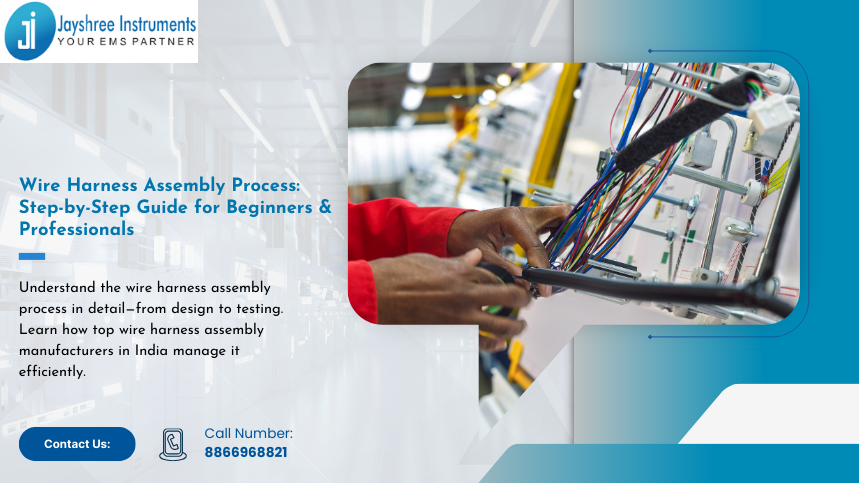
Wire harnesses are the unsung heroes of modern electronics. They bundle and organize multiple wires or cables into a single assembly, simplifying electrical systems and improving reliability. Whether it’s your car, washing machine, or an airplane, wire harnesses ensure seamless power and data transmission.
In India, with the rise of EVs, industrial automation, and consumer electronics, demand for precise, high-quality wire harnesses is booming. As such, understanding this process helps both technical buyers and manufacturing enthusiasts.
What is a Wire Harness?
A wire harness is a structured bundle of wires, connectors, terminals, and protective sleeves that route power or data across systems. It keeps wiring systems neat, reduces installation time, and minimizes the risk of electrical shorts or disconnections.
Components of a Wire Harness:
- Wires/Cables – Usually copper, sometimes tinned or silver-plated.
- Connectors – Facilitate easy plug-and-play.
- Terminals – Crimped or soldered ends.
- Sleeves or Looms – Provide abrasion resistance and insulation.
- Clips, Ties, and Labels – Ensure accurate routing and ID.
Step-by-Step Wire Harness Assembly Process
Every wire harness goes through a systematic process—from raw wire cutting to final quality checks. This ensures functionality, durability, and safety for end-users.
1. Wire Cutting
Precision cutting is the first step. Machines cut wires to specified lengths based on engineering drawings. In high-volume facilities, computer-controlled cutters increase speed and accuracy.
Example: A typical automotive harness may require over 300 unique wire segments.
2. Stripping and Termination
After cutting, each wire’s insulation is stripped to expose conductive metal. The length of strip depends on connector type. For larger harnesses, stripping is semi-automated.
Termination follows—this involves crimping terminals or pins at the ends. Proper termination ensures electrical contact and physical retention inside the connectors.
- Crimping
Crimping joins the terminal and wire through pressure, forming a gas-tight seal. This step is often automated in large-scale production and tested with crimp force monitors.
- Manual Crimping: Ideal for low-volume or prototype builds.
- Hydraulic Crimping: For heavy-duty cables (e.g., EV batteries).
Faulty crimping can result in 70% of electrical failures in field systems.
4. Routing & Assembly on Boards
Routing wires through layout boards helps build the harness according to the schematic. Assembly boards are designed to hold clips and pegs that guide wires to their correct positions.
At this stage, cables are bundled, bound, or sleeved using zip ties, tapes, or convoluted tubing.
Well-routed harnesses reduce EMI (electromagnetic interference) and overheating.
5. Soldering & Connector Assembly
When mechanical crimping isn’t feasible or for added strength, wires are soldered to connectors. Soldering ensures a strong bond between wire and terminal and is common in medical and aerospace harnesses.
Heat-shrink sleeves are then applied for strain relief and insulation.
6. Electrical Testing
Before approval, harnesses undergo rigorous testing. Continuity testers check if current flows from end-to-end. Advanced testers identify short circuits, cross wires, and insulation faults.
Common Tests Include:
- Continuity Check
- Hi-Pot (High Voltage) Test
- Insulation Resistance Test
- Functional Load Simulation
7. Labeling & Packaging
Correct labeling is vital for installation and maintenance. Barcodes, alphanumeric IDs, or color codes are used. Final assemblies are bundled securely in anti-static or foam-lined packaging.
In automotive harnesses, mislabeled wires can delay production by hours.
Tools Used in Wire Harness Assembly
| Tool | Purpose |
| Wire Strippers | Remove insulation without nicking |
| Crimping Press | Attach terminals securely |
| Harness Boards | Aid in layout accuracy |
| Cable Testers | Ensure electrical integrity |
| Heat Guns | For heat-shrink tubing |
Common Quality Standards Followed
Wire harness assembly requires adherence to international safety and quality benchmarks:
- IPC/WHMA-A-620 – Defines acceptability criteria for harnesses.
- ISO 9001 & IATF 16949 – Ensure quality management systems in electronics and automotive sectors.
- UL Certification – Recognized in North American markets for wire safety.
Automation vs Manual Assembly
| Feature | Manual Assembly | Automated Assembly |
| Initial Cost | Low | High |
| Scalability | Limited | High |
| Quality Consistency | Depends on skill | Highly repeatable |
| Ideal Use Case | Custom/Prototypes | Mass Production |
India’s small and mid-size industries often blend both, achieving cost-effectiveness and flexibility.
Industries Using Wire Harnesses
Wire harnesses are found in virtually every sector:
- Automotive: ABS systems, infotainment, lighting
- Consumer Electronics: Appliances, LED lighting
- Aerospace: Navigation systems, sensors
- Medical Devices: ECG, imaging, diagnostic machines
- Renewable Energy: Solar inverters, wind turbines
Benefits of Efficient Wire Harness Assembly
- Speeds up Installation: Plug-and-play reduces on-site labor.
- Improves Safety: Prevents short circuits and overheating.
- Cuts Manufacturing Time: Reduces handling of individual wires.
- Enhances Maintainability: Simplifies diagnostics and replacements.
Latest Trends & Innovations
India’s manufacturing sector is evolving with:
- AI-based Fault Detection: Real-time alerts for quality deviations.
- 3D Wire Harness Modeling: Enables precise virtual prototyping.
- Eco-friendly Insulation: RoHS-compliant, halogen-free materials.
- RFID Tagging: Enhances traceability in logistics and inventory.
According to MarketWatch, the global wire harness market is projected to grow at 5.9% CAGR through 2030.
Conclusion
Wire harnesses are foundational to modern machinery. Understanding the wire harness assembly process is essential for ensuring quality, reducing failures, and achieving efficient builds. Whether you’re a design engineer, OEM, or buyer, choosing the right wire harness assembly manufacturer can make all the difference.
For large-scale or EMS-based production, explore partnerships with top ems manufacturers in India for reliable service and certifications.
5 FAQs – Wire Harness Assembly Process
Q1. What is the purpose of a wire harness?
A: To organize and protect wires in a structured format, improving safety and ease of installation.
Q2. How long does it take to assemble a wire harness?
A: Simple harnesses may take minutes; complex ones for automobiles may take several hours or days.
Q3. What are common wire harness materials?
A: Copper wires, PVC insulation, nylon braids, polyolefin tubing.
Q4. Can wire harnesses be custom-made?
A: Yes, they are typically built to the client’s specifications and application needs.
Q5. Is manual wire harness assembly still used?
A: Yes, especially for small batches, prototypes, and customized assemblies.