Electronics Manufacturing
For Power Systems That
Demand Thermal Precision
We manufacture power electronics assemblies with the DFM expertise, thermal validation, and safety testing that high-power applications demand.
What power electronics manufacturing actually demands
Challenge 01
Thermal management is critical
and often underestimated
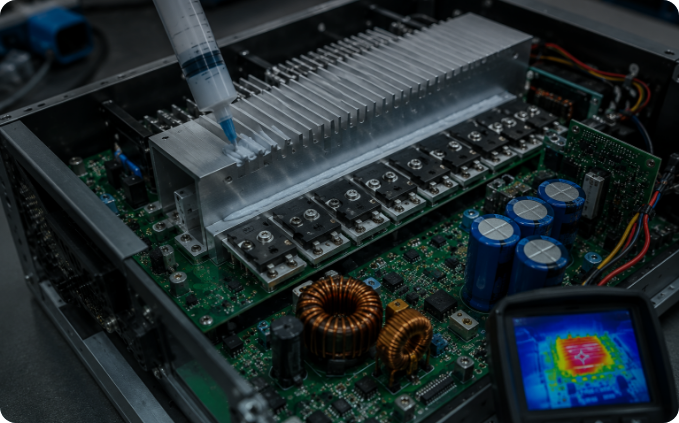
Power electronics generate heat that, if not properly managed, degrades component life and eventually causes failure. Thermal management must be designed in heatsink interfaces, thermal paste application, and airflow paths not added as an afterthought.
01
Thermal management is critical
and often underestimated
Power electronics generate heat that, if not properly managed, degrades component life and eventually causes failure. Thermal management must be designed in heatsink interfaces, thermal paste application, and airflow paths not added as an afterthought.
Challenge 02
High-voltage safety
compliance
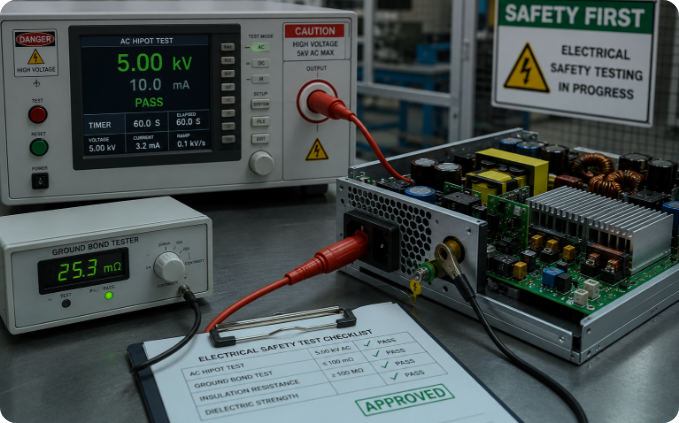
Mains-powered and high-voltage power assemblies must meet strict electrical safety requirements - creepage and clearance distances, HiPot testing, and ground bond verification before any unit can be deployed safely.
02
High-voltage safety
compliance
Mains-powered and high-voltage power assemblies must meet strict electrical safety requirements - creepage and clearance distances, HiPot testing, and ground bond verification before any unit can be deployed safely.
Challenge 03
Component stress and
derating
Power electronics components operate under electrical and thermal stress. Without proper derating analysis and component selection, long-term reliability is compromised often in ways that aren't visible until units start failing in the field.
03
Component stress and
derating
Power electronics components operate under electrical and thermal stress. Without proper derating analysis and component selection, long-term reliability is compromised often in ways that aren't visible until units start failing in the field.
Challenge 04
Mixed-technology assembly
complexity
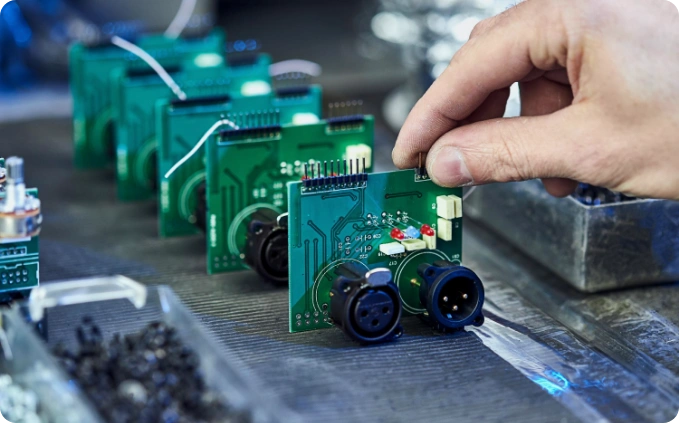
Power electronics boards typically combine high-power through-hole components with SMT control circuitry requiring careful assembly sequencing, selective soldering, and inspection processes that handle both technologies without compromise.
04
Mixed-technology assembly
complexity
Power electronics boards typically combine high-power through-hole components with SMT control circuitry requiring careful assembly sequencing, selective soldering, and inspection processes that handle both technologies without compromise.
Manufacturing solutions built for power electronics' demands
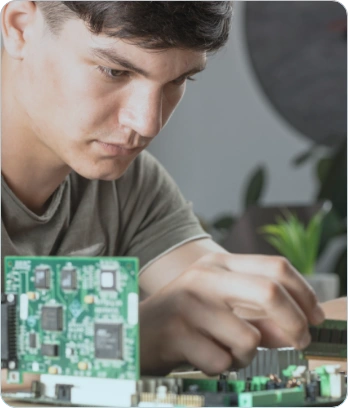
SMT and through-hole assembly for complex power electronics boards with selective soldering, thermal paste application, heatsink mounting, and multi-stage inspection at every critical stage.
Thermal interface material application, heatsink mounting, and thermal validation ensuring heat is transferred efficiently from power components to heat management systems throughout the finished assembly.
High-potential insulation testing, ground bond testing, and dielectric strength verification confirming electrical safety compliance on every mains-powered power electronics assembly before despatch.
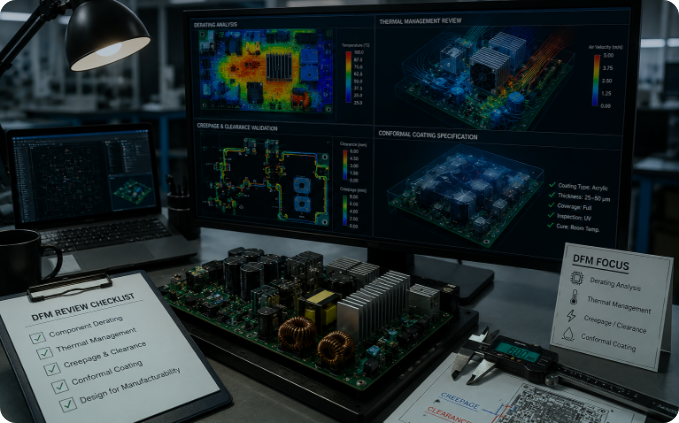
DFM review specifically focused on power electronics component derating analysis, thermal management review, creepage and clearance validation, and conformal coating specification at design stage.
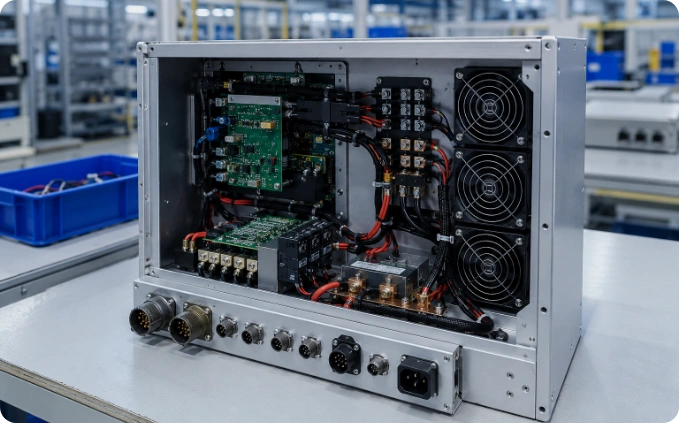
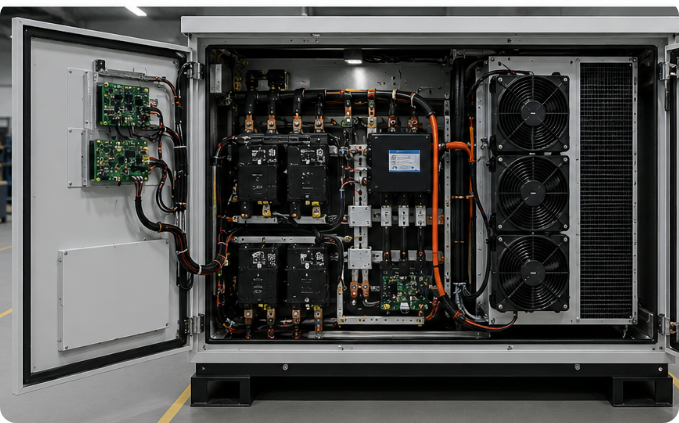
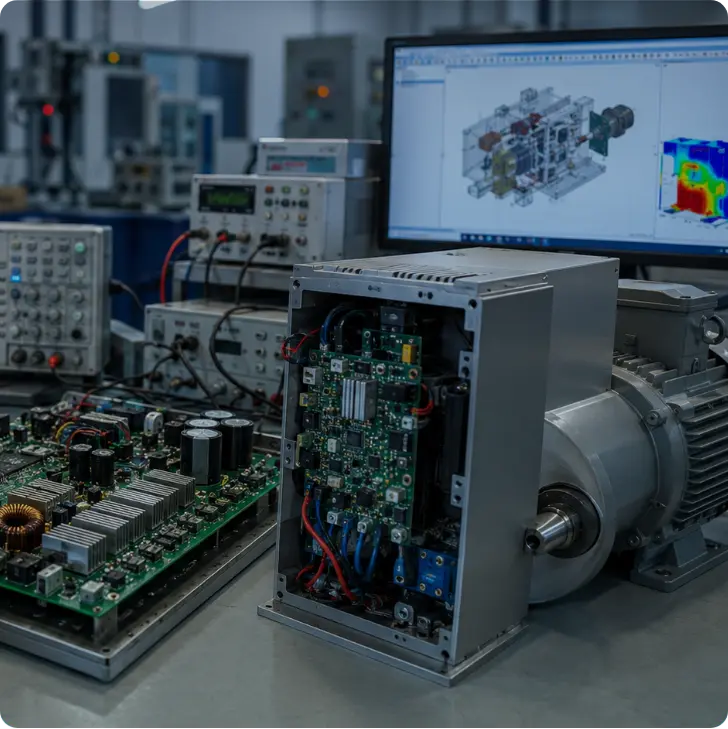
Complete power system assembly - PCBs, power wiring harnesses, enclosures, and cooling systems integrated and tested as a finished, field-ready product under one roof.
Extended burn-in at rated load and elevated temperature - screening infant mortality failures and validating long-term thermal performance before power electronics assemblies enter service.
SMT and through-hole assembly for complex power electronics boards with selective soldering, thermal paste application, heatsink mounting, and multi-stage inspection at every critical stage.
Thermal interface material application, heatsink mounting, and thermal validation ensuring heat is transferred efficiently from power components to heat management systems throughout the finished assembly.
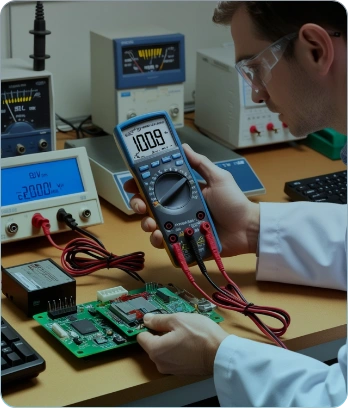
High-potential insulation testing, ground bond testing, and dielectric strength verification confirming electrical safety compliance on every mains-powered power electronics assembly before despatch.
DFM review specifically focused on power electronics component derating analysis, thermal management review, creepage and clearance validation, and conformal coating specification at design stage.
Complete power system assembly - PCBs, power wiring harnesses, enclosures, and cooling systems integrated and tested as a finished, field-ready product under one roof.
Extended burn-in at rated load and elevated temperature - screening infant mortality failures and validating long-term thermal performance before power electronics assemblies enter service.
The standards that govern power electronics manufacturing
IEC 62368 — Audio/video & IT equipment safety
IEC 62368 — Audio/video & IT equipment safety
Widely applied safety standard for mains-powered electronics - our assemblies are manufactured with IEC 62368 creepage, clearance, and insulation requirements considered throughout the build process.
HiPot & ground bond testing
HiPot & ground bond testing
100% HiPot and ground bond testing on all mains-powered assemblies verifying electrical safety before any unit is released for despatch, with test records maintained per unit.
IPC-A-610 Class 2 & 3
IPC-A-610 Class 2 & 3
PCB assembly workmanship to Class 2 or 3 depending on application criticality with Class 3 applied to safety-critical power electronics where continuous reliable operation is non-negotiable.
RoHS & REACH compliance
RoHS & REACH compliance
All power electronics assemblies built to RoHS and REACH compliance meeting the environmental requirements of global power electronics markets including EU, UK, and India.
IEC 62368 — Audio/video & IT equipment safety
Widely applied safety standard for mains-powered electronics - our assemblies are manufactured with IEC 62368 creepage, clearance, and insulation requirements considered throughout the build process.
HiPot & ground bond testing
100% HiPot and ground bond testing on all mains-powered assemblies verifying electrical safety before any unit is released for despatch, with test records maintained per unit.
IPC-A-610 Class 2 & 3
PCB assembly workmanship to Class 2 or 3 depending on application criticality with Class 3 applied to safety-critical power electronics where continuous reliable operation is non-negotiable.
RoHS & REACH compliance
All power electronics assemblies built to RoHS and REACH compliance meeting the environmental requirements of global power electronics markets including EU, UK, and India.
Why Power electronic programmes choose Us
Power electronics fail for predictable reasons - poor thermal management, inadequate safety testing, and component stress that wasn't caught at design stage. Here's how we prevents all three.
Thermal management built into DFM
Our DFM reviews for power electronics include thermal simulation inputs, component derating analysis, and heatsink integration assessment catching thermal design risks at the cheapest stage to fix them.
100% HiPot safety testing as standard
Every mains-powered assembly HiPot tested before despatch not sampled. Electrical safety is verified on every single unit, with test records maintained for every programme.
Mixed-technology assembly expertise
Power electronics boards combine high-power THT and precision SMT. Our selective soldering capability and assembly sequencing ensures both technologies are built to the same quality standard.
Burn-in and load testing capability
Extended burn-in at rated load - screening infant mortality failures that only surface under real operating conditions, before units reach customers where field failures are costly.
PCB, harness & enclosure under one roof
Power PCBs, high-current wiring harnesses, and enclosures assembled as one integrated system eliminating the handoff gaps and accountability confusion of multi-supplier power electronics programmes.
25+ years of industrial power electronics experience
Decades of cross-industry experience with power electronics across solar, industrial, and EV applications - your programme benefits from the thermal and electrical lessons already learned.
Why Power electronic programmes choose Us
Power electronics fail for predictable reasons - poor thermal management, inadequate safety testing, and component stress that wasn't caught at design stage. Here's how we prevents all three.
Thermal management built into DFM
Our DFM reviews for power electronics include thermal simulation inputs, component derating analysis, and heatsink integration assessment catching thermal design risks at the cheapest stage to fix them.
100% HiPot safety testing as standard
Every mains-powered assembly HiPot tested before despatch not sampled. Electrical safety is verified on every single unit, with test records maintained for every programme.
Mixed-technology assembly expertise
Power electronics boards combine high-power THT and precision SMT. Our selective soldering capability and assembly sequencing ensures both technologies are built to the same quality standard.
Burn-in and load testing capability
Extended burn-in at rated load - screening infant mortality failures that only surface under real operating conditions, before units reach customers where field failures are costly.
PCB, harness & enclosure under one roof
Power PCBs, high-current wiring harnesses, and enclosures assembled as one integrated system eliminating the handoff gaps and accountability confusion of multi-supplier power electronics programmes.
25+ years of industrial power electronics experience
Decades of cross-industry experience with power electronics across solar, industrial, and EV applications - your programme benefits from the thermal and electrical lessons already learned.
Industrial motor drive PCB programme - thermal
validated, HiPot cleared, zero field returns.
Problem
An industrial motor drive OEM was experiencing field failures on their previous supplier's assemblies traced to inadequate thermal interface material application and inconsistent HiPot testing. They needed a manufacturing partner with genuine power electronics discipline.
Solution
We conducted a DFM review identifying thermal and derating issues, implemented a dedicated assembly process with controlled TIM application, selective soldering, 100% HiPot testing, and burn-in at rated load before despatch.
Outcome
Zero field returns in first 12 months - versus 3.2% field failure rate with previous supplier. Client transferred full programme volume to us within 6 months of first delivery.
0% vs 3.2% field failure rate · full programme transferred
Ready to discuss your power electronics programme?
Tell us about your product, power levels, and operating environment and our team responds within 24 hours.








.svg)