Loading
DFM that catches problems before
they become production costs
Design for manufacturability isn't a checkbox, it's the difference between a smooth production ramp and costly redesigns. Our DFM process
covers PCB assembly, wire harness, and box build giving your product the best possible foundation before a single unit is built.
Trusted by teams that can’t afford failure
25
+
Years DFM experience
500
+
Products reviewed
3
x
Fewer redesign cycles
PCB
+
WH + Box build DFM
IPC
Guidelines compliant
The cost of fixing a problem doubles at every stage
A design issue caught at the DFM review stage costs a fraction of what it costs to fix during prototyping and a tiny fraction of what it costs after production has started. DFM is the most valuable investment you can make before your product hits the line.
What DFM actually does

DFM bridges the gap between engineering intent and manufacturing reality evaluating your design through the lens of how it will actually be built, tested, and scaled.

  • Detects design flaws before fabrication begins
  • Prevents costly delays and material waste
  • Improves first-pass yield and product reliability
  • Aligns design decisions with production realities
  • Accelerates prototype and production ramp-up
Why most products stall without it

Even well-engineered designs can hit avoidable production problems – tight tolerances, non-standard components, poor test access, or harness routing that doesn’t work at volume. These issues are easy to fix at design stage. They’re expensive to fix after.

  • Wrong pad sizes or via placement → rework at assembly
  • Obsolete or single-source components → supply delays
  • Poor harness routing → assembly errors at volume
  • Missing test points → increased debug time and cost
DFM across every manufacturing discipline.
Unlike PCB-only DFM services, we review manufacturability across your entire product - PCB assembly, wire harness, and
box build giving you a complete picture before production begins.

We assess your PCB layout for manufacturability, spacing, and signal integrity ensuring compliance with IPC Class 2 & 3 standards and preparing the design for repeatable, high-yield production.
  • Pad and via placement review
  • Thermal stress point identification
  • Trace width and clearance validation
  • Panelisation and fiducial review

We check silkscreen placement, fiducials, accessible test points, and optimal panelisation ensuring smooth SMT, AOI inspection, and testing workflows without bottlenecks.
  • SMT placement feasibility
  • AOI and X-ray accessibility
  • Test point placement and ICT access
  • Silkscreen and legend clarity

We audit every component for availability, package compatibility, and lifecycle status flagging risks and recommending vetted alternates to reduce sourcing delays and obsolescence.
  • Component availability check
  • Lifecycle and EOL risk flagging
  • Package and footprint compatibility
  • Cost-down alternate suggestions

We confirm ICT and flying probe access, identify test coverage gaps, and ensure your board is ready for comprehensive in-process and functional testing at volume.
  • ICT and flying probe access points
  • Test coverage gap identification
  • Functional test feasibility review
  • Debug cycle reduction inputs

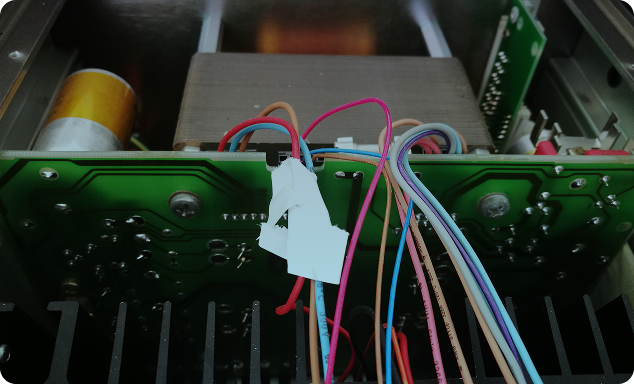
We evaluate harness routing for assembly feasibility checking breakout geometry, bend radii, and form-board compatibility to ensure the harness can be built consistently at volume.
  • Bend radius and flex point review
  • Breakout geometry validation
  • Form-board routing feasibility
  • Bundling and protection spec review

We validate connector selection, crimp compatibility, and termination specifications flagging potential issues and suggesting cost-effective alternatives where appropriate.
  • Connector availability and compatibility
  • Crimp tooling and terminal fit review
  • Cost-down connector alternatives
  • Overmold and strain relief feasibility

We review your harness design for test point accessibility and continuity test coverage ensuring 100% electrical verification is achievable at production volume.
  • Continuity test point planning
  • HiPot test feasibility review
  • Test board compatibility check
  • Miswire risk identification

We check material and protection specifications against your application environment - temperature range, vibration, moisture, and chemical exposure to ensure long-term reliability in the field.
  • Material suitability for environment
  • IPC/WHMA-A-620 compliance review
  • IP rating and protection spec validation
  • RoHS and regulatory compliance check

We review tolerances, board edges, cutouts, and connector alignment catching mechanical interference issues before tooling is committed and enclosures are ordered.
  • PCB-to-enclosure fit validation
  • Connector and port alignment review
  • Tolerance stack-up analysis
  • Cutout and mounting hole review

We assess thermal management provisions - heatsinks, airflow paths, and power distribution ensuring your finished product maintains reliable operation under real-world conditions.
  • Thermal dissipation feasibility
  • Airflow path and ventilation review
  • Power distribution and grounding check
  • Operating temperature validation

We evaluate the build sequence for assembly efficiency identifying access constraints, fastener placement issues, and integration steps that could create bottlenecks at volume.
  • Assembly sequence optimisation
  • Fastener and standoff review
  • Sub-assembly integration feasibility
  • Rework and serviceability review

We review your documentation package - assembly drawings, work instructions, and BOM to ensure everything is complete, accurate, and production-ready before build begins.
  • Assembly drawing completeness review
  • BOM accuracy and part number validation
  • Work instruction readiness check
  • Traceability and serialisation planning

DFM for industries where getting it
right the first time matters most
Every industry has different DFM priorities - regulatory compliance, thermal performance, mechanical
durability, or supply chain resilience. We bring sector-specific DFM knowledge to every review.
From design files to production-ready sign-off in five structured steps.
Our DFM process is fast, collaborative, and actionable delivering specific, prioritised feedback your team can act on immediately.
  • 1 Design file submission
  • 2 Cross-functional engineering review
  • 3 Prioritised DFM report
  • 4 Design iteration support
  • 5 Production-ready sign-off
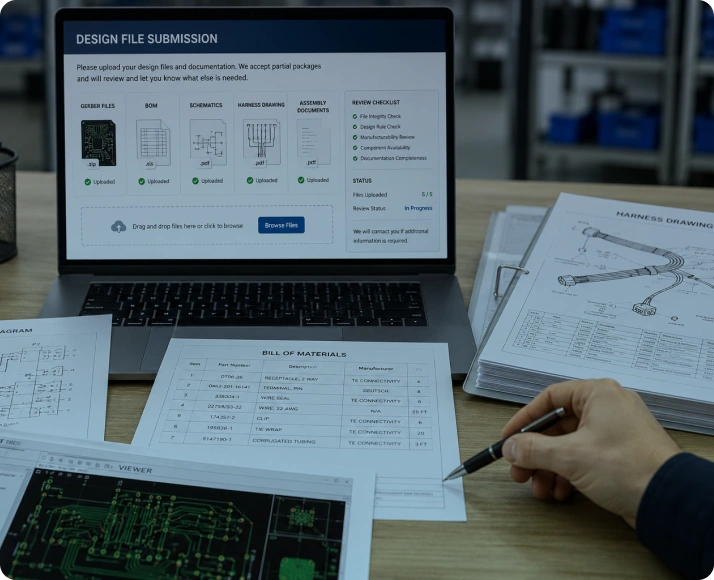
Design file submission
You submit your Gerber files, BOM, schematics, harness drawings, or assembly documentation - whatever you have at this stage. We work with partial packages and flag what we need to complete a thorough review.
Design file submission
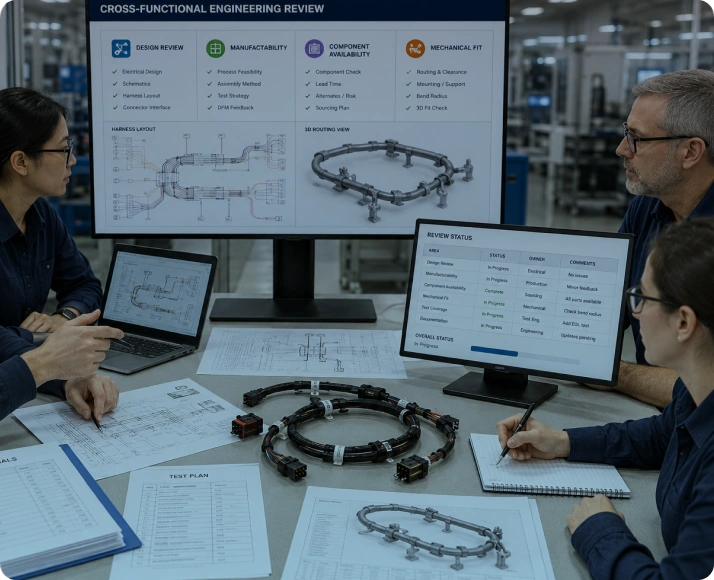
Cross-functional engineering review
Our engineering, production, and sourcing teams review your design simultaneously evaluating manufacturability, component availability, test coverage, and mechanical fit against your target production environment and volume.
Cross-functional engineering review
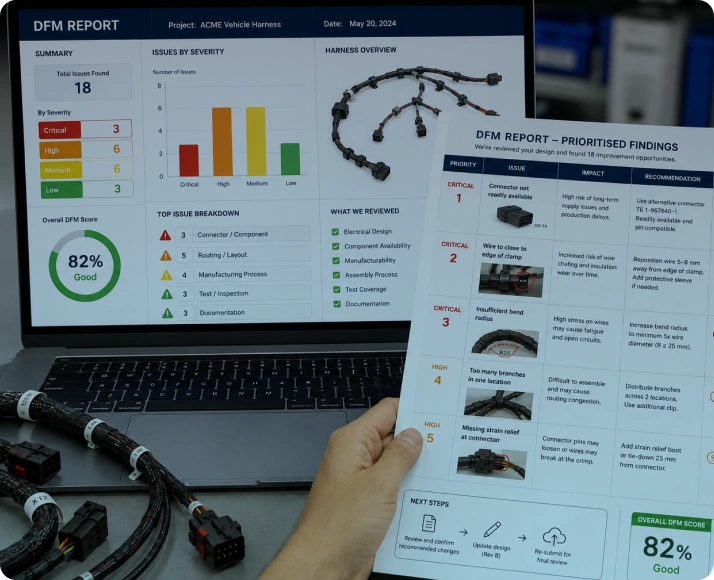
Prioritised DFM report
We deliver a clear, prioritised DFM report categorising issues by severity, explaining the manufacturing impact of each, and providing specific, actionable recommendations. No jargon, no vague observations.
Prioritised DFM report
Design iteration support
We remain available through your design iteration cycle reviewing updated files, answering questions, and confirming that changes resolve the flagged issues before you commit to prototype tooling.
Design iteration support
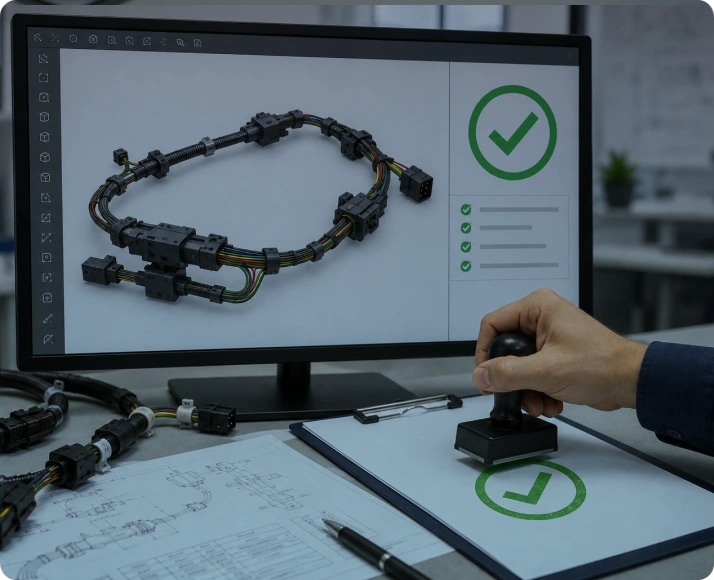
Production-ready sign-off
Once all critical issues are resolved, we provide a DFM sign-off confirming your design is production-ready with full documentation of the review findings and resolutions for your records.
Production-ready sign-off
DFM backed by 25 years of actual production experience
Our DFM reviews aren't theoretical - every recommendation comes from engineers who run
production lines, manage supply chains, and build products every day.
The only DFM that covers PCB, wire harness & box build

Most DFM services only review PCBs. JINST reviews your entire product – PCB assembly, wire harness routing, and box build integration so nothing falls through the cracks between disciplines.

Cross-functional review in one pass

Engineering, sourcing, and production review your design simultaneously so you get a complete picture in one report, not a series of disconnected observations from separate teams.
Manufacturing intelligence, not just design checks

Our feedback is rooted in real production experience – how your design will behave on the SMT line, how your harness will route on a form board, how your box build will assemble at volume.
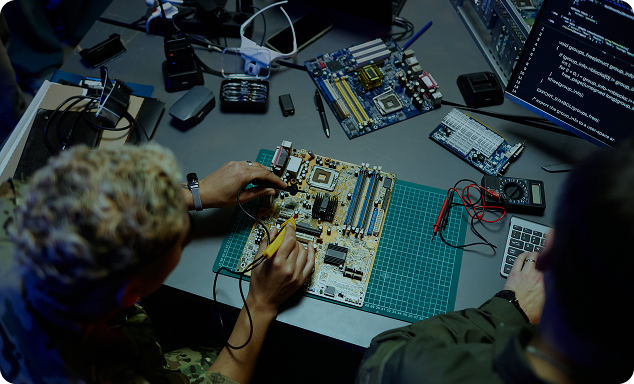
Seamless transition to production

When you’re ready to build, the same team that reviewed your design manages your production programme so nothing is lost in translation between DFM and the production floor.
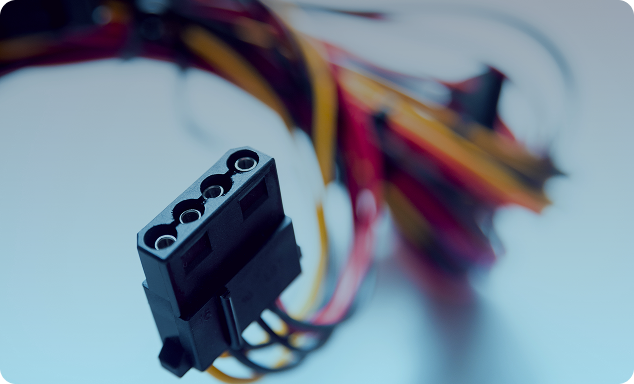
Actionable, prioritised feedback

Every finding is categorised by severity and accompanied by a specific recommendation. No vague observations, just clear guidance your team can act on immediately.

Iterative support through design changes

We stay with you through design iterations, reviewing updated files and confirming changes resolve flagged issues before you commit to prototype tooling or production investment.

Reviews aligned to the standards your industry demands

Every DFM review is conducted against the relevant international standards for your product type
and target industry

IPC-A-610

PCB assembly acceptability standards for Class 2 and Class 3 products

IPC-2221

Generic PCB design standards for layout, spacing, and routing

IPC/WHMA-A-620

Wire harness and cable assembly acceptability standards

IPC-7711/7721

Rework, modification, and repair standards considered in testability review

ISO 9001

Quality management system underpinning every review process

ISO 13485 flow support

Documentation and traceability review for medical device programmes

RoHS & REACH

Component and material compliance check included in BOM review

DFM review that eliminated 11 design issues
before a single prototype was built.
Problem:
A medical device OEM came to JINST with a near-final design that had already failed two prototype runs costing 14 weeks and significant rework budget due to design-manufacturing mismatches across PCB layout and harness routing.
Solution:
We conducted a full cross-discipline DFM review covering PCB layout, BOM, harness geometry, and box build integration identifying 11 critical issues and providing prioritised, actionable recommendations across all three disciplines.
Outcome:
All 11 issues resolved in two design iterations. Product moved from revised design to production-ready in 6 weeks with zero issues flagged at pilot run.
11 issues resolved · 6-week design-to-production handover
Ready to make your design production-ready?
Share your design files - Gerber, BOM, harness drawings, or assembly docs. Our engineering team will review and respond within 24 hours.