Low-Volume vs High-Volume PCB Assembly: Key Differences You Should Know
 09 Jun 2025
  5 min read
 By jinstpvtltd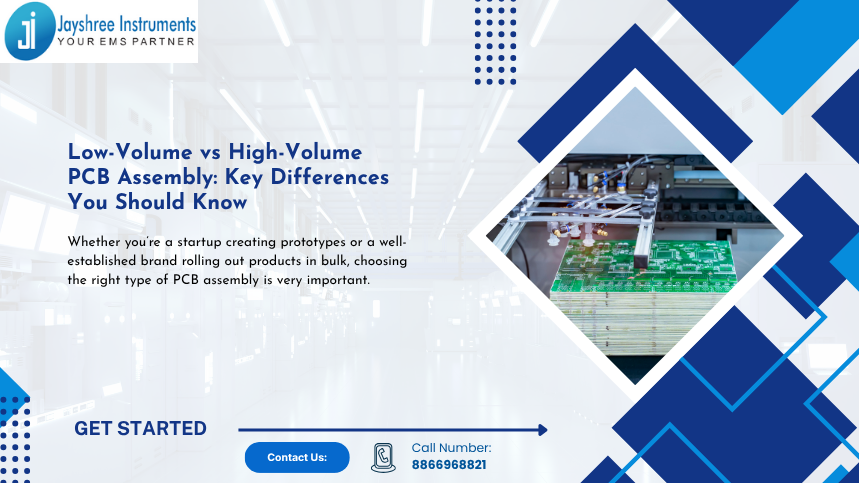
When it comes to electronics manufacturing, PCB (Printed Circuit Board) assembly plays a major role in deciding how efficient, reliable, and cost-effective your final product will be. Whether you’re a startup creating prototypes or a well-established brand rolling out products in bulk, choosing the right type of PCB assembly is very important.
In this blog, let’s break down the key differences between low-volume and high-volume PCB assembly and help you decide which one is the best fit for your project. If you’re working with PCB designing companies in India or looking for PCB assembly services, this guide will clear your doubts.
What is PCB Assembly?
Let’s first understand the basics before we go deeper.
PCB assembly is the process of mounting and soldering various electronic components like resistors, ICs, and connectors onto a blank PCB board. This assembly can be done either in small quantities (low-volume) or in bulk (high-volume), depending on your product stage and goals.
What is Low-Volume PCB Assembly?
Low-volume PCB assembly usually means producing 10 to a few thousand units. This type is ideal for:
- Prototyping
- Pilot runs
- Product testing
- Startups and small-scale production
In India, many PCB designing companies offer low-volume assembly as a flexible option for R&D and fast turnaround.
What is High-Volume PCB Assembly?
High-volume PCB assembly refers to mass production of thousands to lakhs of PCBs in a single batch. It is mostly preferred by large businesses or OEMs (Original Equipment Manufacturers) when:
- The product is already tested and market-ready
- There is a high demand
- Cost efficiency is the goal
These orders typically come with long-term contracts and highly automated production processes.
Key Differences Between Low-Volume and High-Volume PCB Assembly
Let’s compare both types of assembly on major parameters:
| Factor | Low-Volume PCB Assembly | High-Volume PCB Assembly |
| Quantity | 10 to a few thousand units | Thousands to lakhs of units |
| Purpose | Prototype development, initial testing | Full-scale production for market |
| Turnaround Time | Faster, flexible timelines | Longer timelines but streamlined once set |
| Cost Per Unit | Higher (due to setup and tooling) | Lower (economies of scale) |
| Design Flexibility | Easy to make changes in design | Difficult to make changes once in production |
| Testing & Validation | Detailed inspection and manual testing | Automated testing and standard QA checks |
| Setup Requirements | Simple setup with manual and semi-auto processes | High setup cost, full automation required |
| Ideal For | Startups, R&D teams, IoT projects | Consumer electronics, automotive, industrial products |
When Should You Choose Low-Volume PCB Assembly?
If you’re launching a new product or testing out different designs, go for low-volume PCB assembly. It allows:
- Quick turnaround
- Flexibility to modify designs
- Lower investment in case of failure
- Ideal for pre-production testing
For example, many PCB assembly services in India cater to tech startups who want to validate their product design before manufacturing it at scale.
When is High-Volume PCB Assembly the Right Choice?
Once your product is market-ready and you’ve finalised the design, high-volume is the way to go. Benefits include:
- Lower cost per unit
- Faster overall delivery of bulk orders
- Automation ensures consistent quality
- Best for large-scale distribution and global markets
Brands in mobile manufacturing, automotive electronics, and smart appliances mostly prefer high-volume PCB assembly to meet large demands efficiently.
What About Medium-Volume PCB Assembly?
Many projects don’t fall strictly into low or high volume. Medium-volume assembly (say 1,000 to 10,000 units) is also common in India. It’s ideal for:
- Companies scaling gradually
- Products with seasonal demand
- Pilot production runs before mass rollout
Several PCB designing companies in India now offer scalable solutions to support such evolving needs.
Cost Considerations in PCB Assembly
Let’s be real—budget plays a big role in choosing between low-volume and high-volume assembly. Here’s how costs differ:
- Low-Volume: Higher per-unit costs, but less initial investment
- High-Volume: Economical in bulk, but setup costs can be high
- Hidden Costs: Errors in high-volume production can be expensive to fix. So, it’s smart to test thoroughly with low-volume runs first.
How to Choose the Right PCB Assembly Partner?
Whether you want low or high-volume production, picking the right PCB assembly service provider in India is crucial.
Here are some key things to check:
- Experience: Do they have experience in handling your type of product?
- Certifications: Are they ISO-certified or IPC-compliant?
- Prototyping Support: Can they help you in the early design stages?
- Design Services: Do they also provide PCB designing services in India?
- Turnaround Time: How fast can they deliver?
- After-Sales Support: Do they offer rework, repair, or post-delivery assistance?
Real-World Example
Let’s say you’re building a smart home device in Delhi. Initially, you’ll likely opt for low-volume PCB assembly to test how your product performs. Once validated, you scale up and contact a vendor offering bulk PCB assembly services in Bengaluru or Pune.
Having a local vendor can also cut down on shipping costs and speed up delivery.
Final Thoughts
In short, low-volume PCB assembly gives you flexibility and control during early product development, while high-volume PCB assembly offers cost-effective solutions for large-scale manufacturing.
Whether you’re a startup or a big manufacturer, understanding this difference helps you avoid costly mistakes and launch better products.
India has a growing ecosystem of PCB designing companies and assembly service providers, so choose wisely based on your stage and production needs.