
Table of Contents
ToggleWritten by the audiology team at earwaxspecialist.co.uk, your independent, trusted tinnitus experts in Birmingham
Tinnitus refers to the perception of sound, such as ringing, buzzing, or hissing, when no external source is present. It is a condition that affects millions of patients in the UK and it can be disruptive, often affecting sleep and concentration and having a significant impact on an individual’s general emotional well-being.
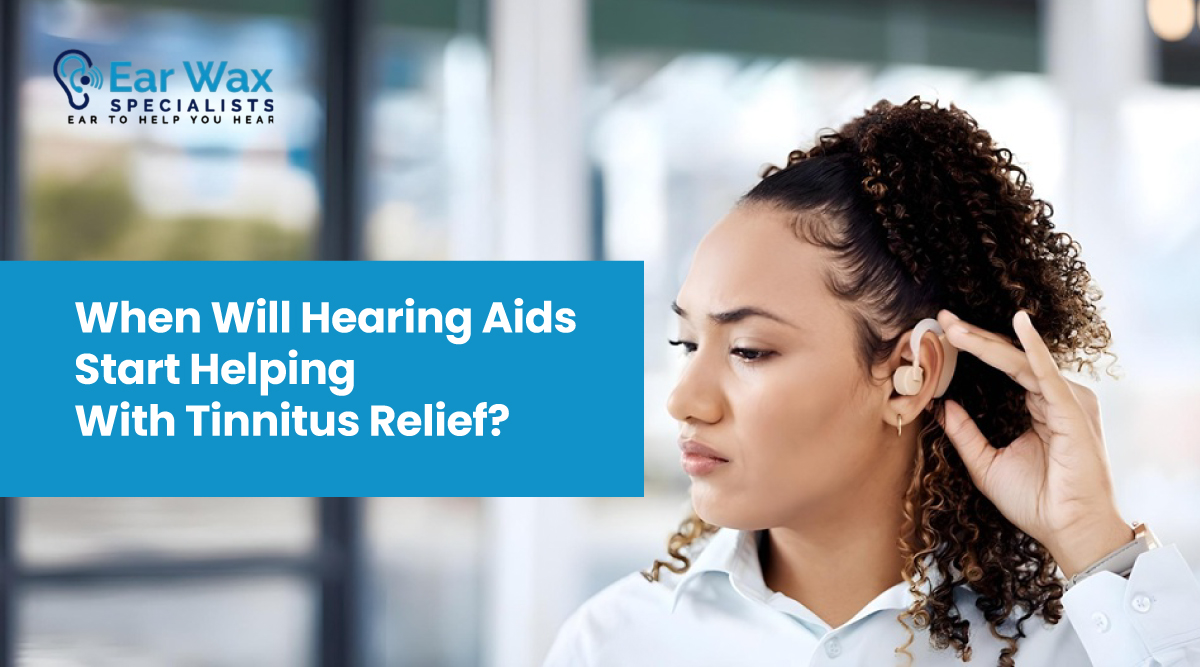
One of the most common tools to help with tinnitus is hearing aids in the presence of hearing loss; however, the question is, how can hearing aids help with my tinnitus?
Below, we will explore how wearing hearing aids helps with reducing the symptoms of tinnitus; we will also look at timescales and how your audiologist can support you with tinnitus relief.
The Link Between Tinnitus And Hearing Loss
Tinnitus is not classified as a medical condition; it is often a symptom that presents itself in the presence of an underlying pathology, namely hearing loss. The damage caused to hair cells, which help send soundwaves travelling via electrical signals into the brainstem, can trigger tinnitus. The reduced sound input caused by hearing loss can create a phantom sound, as the brain tries to fill in the gaps no longer provided due to the damage to the hair cells. The patient then perceives this sound as a form of ringing inside their ears.
It can have a substantial degree of variation in its intensity or frequency. A common statistic indicates that 80% of individuals suffering from tinnitus experience some degree of hearing loss.
How Can Hearing Aids Help With Tinnitus?
1. Sound Therapy Features:
Many of the modern hearing aids from the leading manufacturers over the last 5 years come with built-in tinnitus management programmes. The programmes provide white noise generators, which mimic the sound of a patient’s tinnitus to help reduce the impact of their perception of tinnitus.
2. Lenire:
A new form of tinnitus treatment that helps to reduce the perception of tinnitus using a combination of electrical impulses and sound stimulation to reduce overall tinnitus perception by retraining the brain. It does this by sending electrical impulses to the tongue as well as providing sound stimulation via headphones. The combination of these two bimodal stimulations acts to retrain the brain’s neuroplasticity, causing the brain to be less attentive to the sounds of the phantom tinnitus the patient perceives.
3. Masking Impact:
This is a very common phenomenon of wearing hearing aids. The natural amplification of sounds, which the patient cannot normally hear because of hearing loss, when prescriptively amplified, can mask the buzzing or ringing sound that patients perceive in very quiet environments with no ambient noise.
4. Amplifying Ambient Sound:
When your hearing is improved through hearing aids, there is an overall reduction in the difference between the external amplified sounds and the internal noise of the tinnitus. This will, in turn, make the tinnitus less noticeable, thus relieving the impact or intensity of your symptoms.
Are There Any Alternatives?
Taking a holistic approach to tinnitus relief is very important. It can take a while for your brain to habituate to the sound of tinnitus and there are several factors, not just hearing loss, that can affect its perception. For example, stress, high venous blood pressure, and poor sleep can all play a part in the overall perception of tinnitus.
Along with hearing aid fittings, your audiologist should also provide tinnitus consultations, exploring other factors that may be contributing to your perception of tinnitus.
These include
- Cognitive behavioural therapy
- Tinnitus retraining therapy
- Sound therapy to help with relaxation
Why is choosing the right hearing instrument important?
All manufacturers of best hearing aids have slightly different philosophies on what the correct and adequate type of amplification should sound like. This is why, even among hearing aid manufacturers, there are differences in sound quality. Some manufacturers focus on generating a more natural sound that mimics human hearing, while others focus more on clarity, often providing a sharper or tinnier sound. There are also variations on the inbuilt tinnitus management programmes, with some hearing aid manufacturers putting a greater emphasis on them, while others can fall short based on our experiences.
At earwaxspecialist.co.uk we provide hearing aids from the world’s leading manufacturers so we are not tied down to any one manufacturer. This enables us to offer rechargeable, Bluetooth-connected, and invisible hearing aids. This gives us the ability to demonstrate a wide array of products as well as custom products designed specifically to tackle tinnitus. We help you understand the factors influencing hearing aid price, which is key to making a confident purchase.
Why Choose An Independent Provider Like Earwaxspecialist.Co.Uk?
We have been serving the patients of Birmingham, Sutton Coldfield, Solihull, Coventry, and Stourbridge for many years. We have over 1000, 5-star Google reviews validating our reputation and our service as a leading independent hearing aid provider. We provide
- Expert tinnitus management
- Quick access to our services from your first call
- Tailored treatment plans for tinnitus and hearing loss
- Expert earwax removal using endoscopic microsuction
Final Thoughts
We are aware of the debilitating nature of tinnitus, and we are also aware that hearing aids are not a complete cure for your symptoms. However, we have seen from our extensive fitting protocols that most of our patients fitted with hearing aids notice a reduction in overall tinnitus symptoms with hearing aids within weeks or months of being fitted.
If you’re currently struggling with tinnitus and would like to discuss your options for helping reduce and combat your symptoms, then you can always get in touch with us and book your free hearing test consultation at earwaxspecialist.co.uk.
Don’t suffer in silence; we are “ear to help”