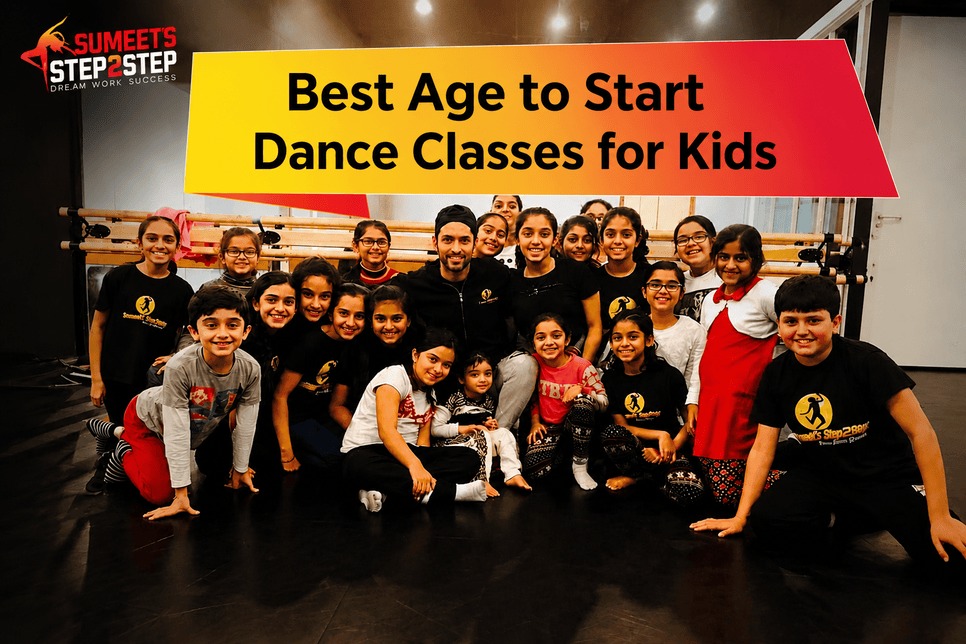
Every parent asks this at some point. Your child is bouncing around the living room to every song that comes on, and you start wondering if it is time to channel that energy somewhere. Dance classes seem like the obvious next step. But then comes the question: how young is too young, and is there actually a right age to start?
The honest answer is that it depends on the child and the type of class, but there are some clear patterns worth knowing about. Starting too early without an age-appropriate structure can be frustrating for both kids and parents. Waiting too long is rarely a problem in terms of development, but it can mean missing a window of natural enthusiasm. Here is a proper breakdown by age group so you can make a sensible decision for your kid specifically.
Before getting into age specifics, it is worth being clear about why this matters beyond the obvious. Dance classes for children are not just about learning steps. The developmental benefits show up across multiple areas, and they are real.
Coordination, balance, and body awareness all improve significantly through structured dance training. These are physical foundations that carry into every sport and physical activity a child takes up later. Socially, dance classes teach kids to work in groups, take direction, and perform in front of others, which builds a kind of quiet confidence that does not always come from academic settings. And there is the creative side too. Children who learn to express themselves through movement early tend to be more comfortable with creative expression generally as they grow up.
Two-year-olds can definitely move to music and love doing it. But calling what they do in a structured setting a dance class is a stretch. At this age, the attention span is short, the ability to follow sequential instructions is limited, and the concept of mirroring a teacher or remembering a sequence just is not there yet developmentally.
Parent-and-child movement classes exist for this age group, and they serve a purpose. They are social, they introduce kids to a studio environment, and they get bodies moving in coordinated ways. But if you are expecting your two-year-old to come home having learned choreography, you will be disappointed. This age is about exposure and enjoyment, nothing more structured than that.
This is where genuine dance education becomes possible. Three to five-year-olds can follow simple instructions, copy movements, and begin to understand the idea of a routine. Their focus is still short, and classes need to be designed around that reality, but the foundations for real learning are present.
Creative movement and pre-ballet classes for this age group are designed specifically around short attention spans and playful learning. Bollywood and rhythmic dance styles also work well here because the music is engaging and the movements tend to be expressive and fun rather than technically demanding. Kids at this age respond to energy and enthusiasm from a teacher more than to technical correction.
Starting at three or four is genuinely good timing if your child is showing interest. The earlier exposure to music, rhythm, and structured physical movement builds a foundation that shows up years later as better coordination and musical sensitivity.
By five, most children can handle a more structured class format. They can hold a sequence in memory, take corrections without melting down, and begin to understand the difference between practice and performance. This is the age where progress becomes more visible and where children start to develop a real sense of whether they love dance or just like it.
Class length can extend here. Forty-five minutes to an hour is reasonable for this age group. The variety of styles that work also expands. Classical dance forms, folk styles, hip hop, and Bollywood all become genuinely accessible at this stage. If your child has been in creative movement classes since three or four, this is when you will start to see those early years pay off in terms of natural ease with movement.
Children in this range can handle technical instruction properly. Footwork, posture, timing, expression. They can receive feedback and apply it. Group routines become genuinely collaborative rather than everyone just doing their own version of the same thing. If a child wants to progress seriously in any dance style, beginning by age eight or nine puts them in a good position to develop real competency before the teenage years, when other activities start competing for time.
This is also the age when kids will tell you clearly whether they want to continue. Some will love it more with each year. Others will have gotten what they needed from two or three years of classes and be ready to move on. Both outcomes are completely fine.
There is a persistent worry among parents that if their child has not started dance by a certain age, they have missed the window. For recreational dance and most performance styles, including Bollywood, folk, hip hop, and contemporary, this is simply not true. A ten or twelve-year-old starting for the first time will progress quickly because their cognitive ability to learn and retain sequences is much higher than a younger child’s. What they lack in early exposure, they often make up for in focus and commitment.
The only area where very early starting makes a meaningful structural difference is classical ballet at the elite level, where the physical conditioning of the body over many years does matter. For everything else, later starters do just fine.
Age is a guide, not a rule. These signals matter more than the number:
A child who ticks most of these boxes is probably ready, regardless of whether they are three or thirteen. A child who ticks none of them might benefit from waiting another six months, even if they are the right age on paper.
The style of dance matters as much as the timing. Creative movement and pre-ballet suit the under-fives well. Bollywood is genuinely excellent for children across a wide age range because the music is familiar, the movements are expressive, and the cultural connection adds a layer of meaning that purely technical styles sometimes lack. Hip hop and contemporary work well from around six or seven. Classical forms like Bharatanatyam or ballet are best introduced around five or six if the goal is serious study.
The teacher and the studio environment matter enormously, too. A good teacher for young children is patient, energetic, and understands child development as much as they understand technique. The best classes for kids under seven look more like guided play than formal instruction, and that is exactly as it should be.
The best age to start dance classes for most children lies somewhere between three and five for a first introduction, with real structured learning becoming possible from five or six onwards. Starting later is never too late for recreational or cultural dance styles. Ultimately, what counts is how interested the kid is, the kind of teaching environment there is, and if the class matches their level of development.
In case you’re looking for such a dance academy, you could look into joining Sumeet Step2Step Bollywood Dance Academy, which has classes designed according to different age groups, making sure that not only do they have fun learning the dance steps, but they are also being taught according to their capacity. Be it a novice or an expert, at Sumeet Step2Step, your kids will always be eager to join their classes.