Dance has existed for as long as people have existed. Before structured exercise, before therapy, before even written language, humans used movement to express emotion and release energy. People danced after work, during festivals, and in moments of joy or grief. It wasn’t planned or polished. It was natural.
Over time, daily life changed. Work became more sedentary. Screens replaced movement. Long hours of sitting became normal. Slowly, people started disconnecting from their bodies. Many now move very little during the day, yet feel tired all the time. That disconnect creates stress, stiffness, and mental fatigue.
Dance offers something simple and deeply human. It brings movement back without pressure. There are no rules that say you must be good at it. No one needs perfect rhythm or trained steps. The body already knows how to move. It just needs permission.
When people search for Dance benefits or start listing Reasons to dance, it often comes from a place of imbalance. They feel low on energy or disconnected. Dance responds to that need directly. This is why discussions around Why everyone should dance never really go away.
Movement is not optional for the human body. Muscles, joints, and internal systems rely on regular motion to stay healthy. When movement reduces, the body adapts in negative ways. Muscles tighten. Joints lose flexibility. Circulation slows down. Over time, even simple tasks start to feel heavier than they should.
The dance further replenishes the natural pattern of movement. It also encourages stretching, bending, turning, and shifting of weight in a balanced manner. Unlike workouts that are repetitive, dance movements keep on changing. This keeps the body engaged without overloading one area. The body gets variety, which it actually prefers.
One of the strongest Reasons to dance is how easy it is to include in daily life. Even ten minutes of dancing can wake the body up. It improves blood flow and loosens stiffness caused by long sitting hours. There’s no setup required, which removes excuses.
Dance benefits also include better posture and balance. Over time, the body feels lighter and more responsive. Movement becomes something the body looks forward to instead of avoiding. That shift alone makes staying active feel less forced and more natural.
Confidence often starts with how comfortable someone feels in their own body. Many people lose that comfort due to long periods of inactivity or self-criticism. Dance slowly rebuilds that connection. It gives the body a chance to move without judgment, which matters more than most people realize.
At first, movement may feel awkward. Timing may feel off. This stage is completely normal. Everyone does it. The big difference that comes with dancing is improvement will happen naturally without pressure, just through repetition. There is no need to compete or compare the progress one makes.
As coordination becomes better, the body feels capable. Memory strengthens as steps become familiar. These all create a trust in the body. Confidence grows quietly, without forcing it. The feeling is subtle but steady.
Among all Dance benefits, this confidence often spills into everyday life. People get to speak more freely, move with less hesitation, and feel freer in social settings. That inner ease shows up in posture, eye contact, and how someone carries themselves.
Many people live mostly in their heads. Thoughts move fast while the body stays still. This gap creates tension and restlessness. Over time, it can feel like the mind and body are working against each other. Dance helps reconnect the two in a very natural way.
While dancing, attention stays in the present moment. Music sets the pace. The body responds, and the mind follows. There is no overthinking, no mental noise. This produces a natural effect of calm-not by any effort at forcing relaxation.
Regular dance improves the awareness of breathing, posture, and balance. People become better at noticing stress before it builds up. Small signals, like tight shoulders or shallow breathing, become easier to catch early. This connection explains why Why everyone should dance appears so often in mental wellness discussions.
Dance helps the mind and body work together again. That harmony reduces stress, improves focus, and increases emotional stability over time.
Dance promotes physical health in a balanced and sustainable manner. Dance strengthens the heart, improves circulation, and builds muscle endurance. Because movements vary, the risk of repetitive strain is low. The body stays active without feeling overworked or pushed too hard.
Mental health benefits appear alongside physical improvements. Movement releases tension stored in the body. Mood improves naturally after dancing. Numerous people experience less anxiety along with better emotions after just a few sessions. The mind feels lighter afterwards.
The Health advantages of dancing can be availed by anyone irrespective of age. Even slow movements can work. There’s no requirement for speed or intensity. What matters is consistency, not perfection. Small efforts add up over time.
Dance also supports better sleep patterns. The body relaxes more easily after movement. With time, dance becomes an effective mechanism for one’s health without feeling like one is engaging in an activity that is demanding and exhausting.
Dance keeps the brain active in subtle but powerful ways. Learning steps strengthens memory. Matching rhythm improves focus. Coordinating movement builds problem-solving skills. The brain stays alert because it has to process timing, space, and movement all at once.
These mental tasks happen naturally during dance. There’s no pressure to analyze or perform. The brain stays engaged without stress, which is ideal for long-term mental health. Instead of feeling mentally drained, many people feel refreshed after dancing.
Dance also improves reaction time. The brain develops an ability to react quickly to any variation of music or movement. This assists in handling different situations in day-to-day life. Gradually, this habit of reaction develops in day-to-day life.
For kids, dancing enhances learning, memory, and coordination. Dancing promotes attention without requiring immobility. For an adult, dancing refines attention as well as multitasking skills. For older individuals, it helps maintain balance, mental clarity, and spatial awareness. Among Dance benefits, brain support is often underestimated, even though it plays a major role in healthy aging.
Dance challenges the mind while keeping the experience enjoyable. By achieving this balance, cognitive flexibility and alertness can be ensured. Moving along with rhythm is an effective way of keeping the brain active and adaptable and is never overwhelming.
Dance is not for professionals or performers only. Dance is for all people. There are “Reasons to Dance” that are beyond the idea of enjoyment as a purpose for dance. Additionally, dance improves movement, confidence, and stability.
When people ask Why everyone should dance, the answer stays simple. Dance reconnects the body and mind. The Health benefits of dancing are gradual, while emotional benefits can be seen quickly. The motion becomes comforting rather than involving effort.
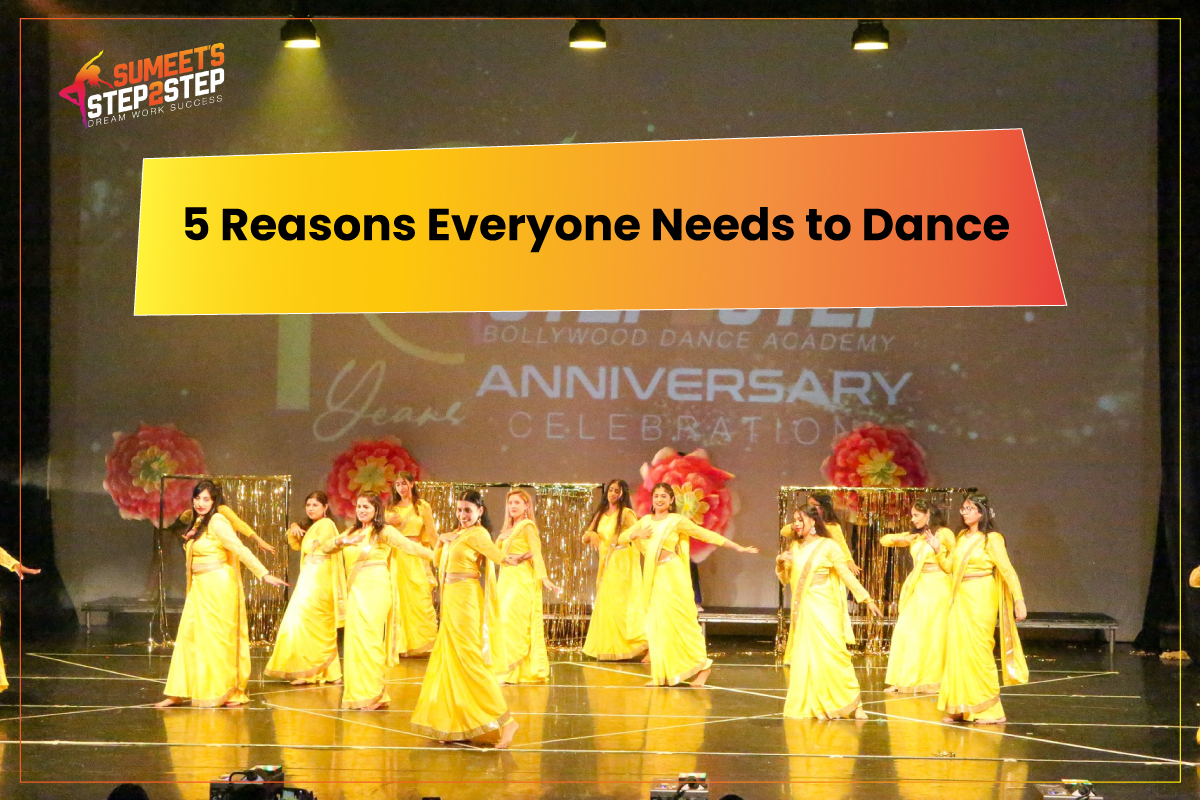
In the Sumeet’s Step2Step Bollywood Dance Academy, dancing happens in a very patient and gentle manner. The emphasis remains on rhythm, comfort, and progress. Every class builds on confidence, expression, and happiness step by step.