Diwali in Mumbai and Navi Mumbai has a taste of its own. There’s the faral that’s been frying in the kitchen for days: chakli, karanji, shankarpali, besan ladoo, chivda. Boxes of kaju katli arrive from neighbours and colleagues. Somewhere between Dhanteras and Bhau Beej, most of us lose count of how many sweets we’ve actually […]
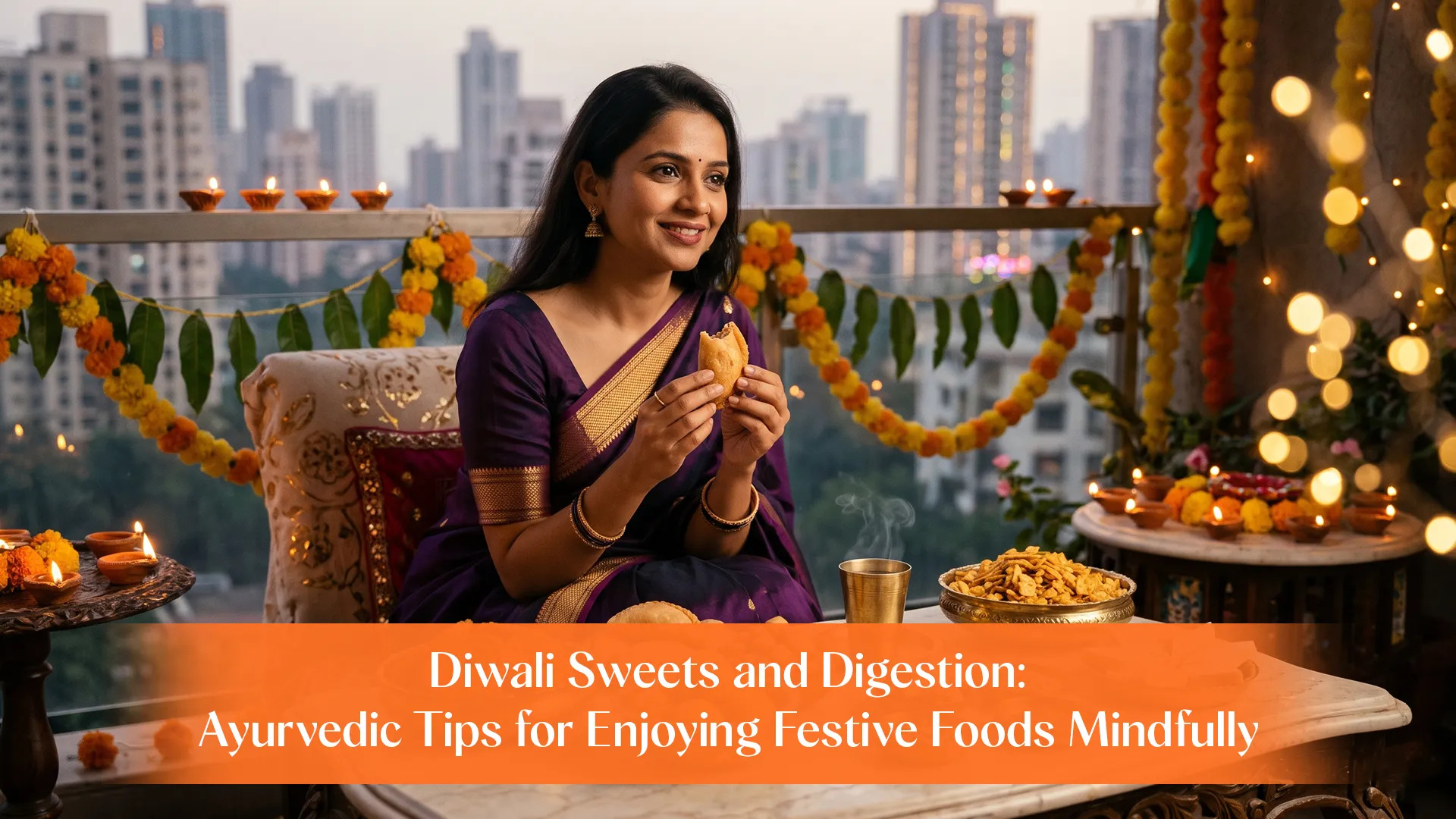
Diwali in Mumbai and Navi Mumbai has a taste of its own. There’s the faral that’s been frying in the kitchen for days: chakli, karanji, shankarpali, besan ladoo, chivda. Boxes of kaju katli arrive from neighbours and colleagues. Somewhere between Dhanteras and Bhau Beej, most of us lose count of how many sweets we’ve actually eaten.
None of that needs to change. Festive food is part of the joy of the season. But if the week usually ends with bloating, acidity or that heavy, sluggish feeling, Ayurveda has some practical advice on how to enjoy it all with a little more ease.
Most Diwali sweets share the same qualities. They’re sweet, rich in ghee or oil, and heavy. In Ayurvedic terms, these are madhura (sweet), snigdha (unctuous) and guru (heavy) foods. In the right amount, they’re nourishing and grounding. Eaten in large quantities, quickly and late at night, they become hard work for the body.
Ayurveda explains this through Agni. Your digestive fire (Agni) is what turns food into energy and nourishment, and it has limits. A few pieces of mithai after lunch is easy enough. Several days of sweets, fried snacks, late dinners and broken sleep is a different story. Agni gets overloaded, and food that isn’t properly digested can leave behind Ama, the sticky residue Ayurveda links to heaviness, a coated tongue and low energy.
Sugar also tends to increase Kapha, the heavy, slow dosha. That’s one reason poor digestion after eating sweets often shows up as dullness and lethargy along with the fullness. Add irregular meals and the odd late night of card games, and it’s easy to see why so many people feel off by the end of the festival.
You don’t need to give anything up. Knowing how to improve digestion during the festive season is mostly about how much you eat, when you eat it and what you pair it with. These Ayurvedic tips for digestion are small, but they add up over a busy week.
Portion control during festivals sounds harder than it is. Two small pieces of a sweet you really love, eaten slowly, are usually more satisfying than a plate of five eaten while you’re talking or scrolling. Taste comes from attention, and your body needs time to register that it’s full.
Mindful eating during Diwali can be as simple as sitting down with your plate instead of picking from the box on the dining table each time you pass. Chew well. Pause between bites. When guests visit and the trays keep coming round, it’s perfectly fine to take one piece and politely skip the rest.
Choosing well helps too. Sweets made with pure ghee, dry-fruit sweets and smaller homemade portions tend to sit better than heavily processed ones made with vanaspati. Fresh fruit, roasted makhana or til-gud on the side can balance a festive plate without anyone noticing.
If you’re hosting this year, you can help your guests too. Serve smaller pieces, keep a bowl of roasted saunf near the sweets, and offer warm water or a light jeera drink alongside the usual cold drinks. Most people appreciate having the option.
In Ayurveda, timing matters almost as much as the food itself. Agni is considered strongest around midday, when the sun is highest, so that’s the best time for your richest sweet of the day. A ladoo after lunch will generally be easier on your system than the same ladoo at eleven at night.
Late-night snacking is the habit most worth watching out for. Diwali evenings often stretch on with visits, puja and dinners that start late. If you can, keep the evening meal lighter and limit sweets after dark.
One more thing. Don’t skip meals to “save space” for sweets. An empty stomach followed by a heavy, sugary snack tends to unsettle digestion more. A light, warm breakfast and a proper lunch keep Agni steady through the day.
Indian sweets were never made without thought. Cardamom, saffron, nutmeg and dry ginger often go into mithai because they help the body handle richness. Digestive spices for festive meals can also be used around the meal itself:
After meals, try shatapavali, a slow, relaxed walk of around ten to fifteen minutes. It’s an old Ayurvedic habit that fits easily into a festive evening, even if it’s just a stroll around your building compound with family.
Sleep is the habit people forget. Late nights can disturb Agni as much as the food does, so try to get to bed at a reasonable hour on at least most nights of the week.
There’s no need for a strict detox or a crash diet once the festivities are over. Ayurveda prefers a gentle reset. The idea is to give your digestive system a lighter workload for a day or two so it can recover.
Some of the best foods to eat after a heavy meal are already familiar. A bowl of moong dal khichdi with a spoon of ghee is the classic choice. Simple dal and rice, vegetable soup or a light upma also work well. Thin buttermilk with roasted cumin and a pinch of salt can help after lunch, and warm water through the day keeps things moving.
It also helps to skip the next heavy meal if you’re still not hungry. Ayurveda advises eating only once the previous meal has been digested, and true hunger is a good sign that Agni is back on track. For the next few days, hold back on deep-fried snacks, cold drinks and leftover sweets, and keep up the after-meal walks.
If symptoms like acidity, stomach pain or bloating carry on well after the festival, don’t ignore them. It’s best to see a doctor. And if you’re managing diabetes, blood pressure or any long-term condition, your doctor’s dietary advice should always come first, during Diwali and after it.
Diwali is meant to be enjoyed, and that includes the food. A few healthy Diwali eating habits, like smaller portions, sweets at lunchtime, digestive spices and an evening walk, let you celebrate fully without paying for it later.
If your digestion often feels unsettled after festivals, or the heaviness takes a long time to lift, personalised guidance can help. At Ovira Ayurveda in Seawoods, Navi Mumbai, our doctors start with a detailed consultation to understand your Prakriti, diet and lifestyle, and suggest a plan that suits you. Wishing you a happy and healthy Diwali from all of us at Ovira.
1. How to improve digestion after eating sweets?
Take a slow walk, sip warm water and chew a little fennel or roasted cumin. Keep your next meal light, such as khichdi or soup, and eat only when you feel hungry again. Avoid lying down straight after a heavy meal.
2. Which Ayurvedic practices support digestion during Diwali?
Eat your richest food at lunch, keep dinners light and avoid late-night snacking. Use digestive spices like ginger, cardamom and ajwain, take a short walk after meals and try to sleep on time.
3. How can you enjoy Diwali sweets without overeating?
Choose one or two favourites rather than sampling everything. Eat them slowly while sitting down, and avoid picking from open boxes through the day. Having proper meals also stops you from snacking on sweets out of hunger.