Table of Contents
ToggleThe course you choose will have a big say in how prepared you feel once you start treating patients. A well-designed programme gives you the confidence to work on real cases and ensures you can assess suitability, gain informed consent, and follow infection control protocols before any procedure. With ear care services growing across the UK, there’s plenty of choice out there, but also plenty of variation in quality. If you’re planning to step into this field or add new skills to your practice, it’s worth knowing what to look out for before you sign up.
Why Microsuction Ear Wax Removal Training Is in High Demand in the UK
Growth of Private Audiology and Ear Care Services
Private clinics and pharmacies have been stepping in to fill the gaps left by busy NHS services. For a lot of people, quicker access and personalised care are worth paying for, and that shift has pushed demand higher for trained specialists. Microsuction Ear Wax Removal Training has become a common route for those wanting to join this expanding side of healthcare but trainees should note that patient selection and referral to ENT for red flag symptoms remain essential parts of safe practice.
Rising Demand for Certified EarwaxRemoval Technicians
Patients are much more aware of the risks of removing earwax at home. Many now actively seek professionals who are trained, insured, and equipped to do it safely and who follow clinical guidance on when to perform microsuction versus when to avoid it, e.g., acute infection, perforation, or presence of grommets. For anyone wondering how to become an earwax removal specialist in the UK, formal training is the first and most important step.
Is Now the Right Time to Train?
It’s hard to find a better time. Clinics, hearing aid centres, and even high street pharmacies are adding microsuction services. With more patients booking these treatments each year, the need for skilled technicians is set to keep growing, provided practitioners remain up to date with refresher training and competency reassessment.
What to Expect from a Quality Microsuction Ear Wax Removal Training Course
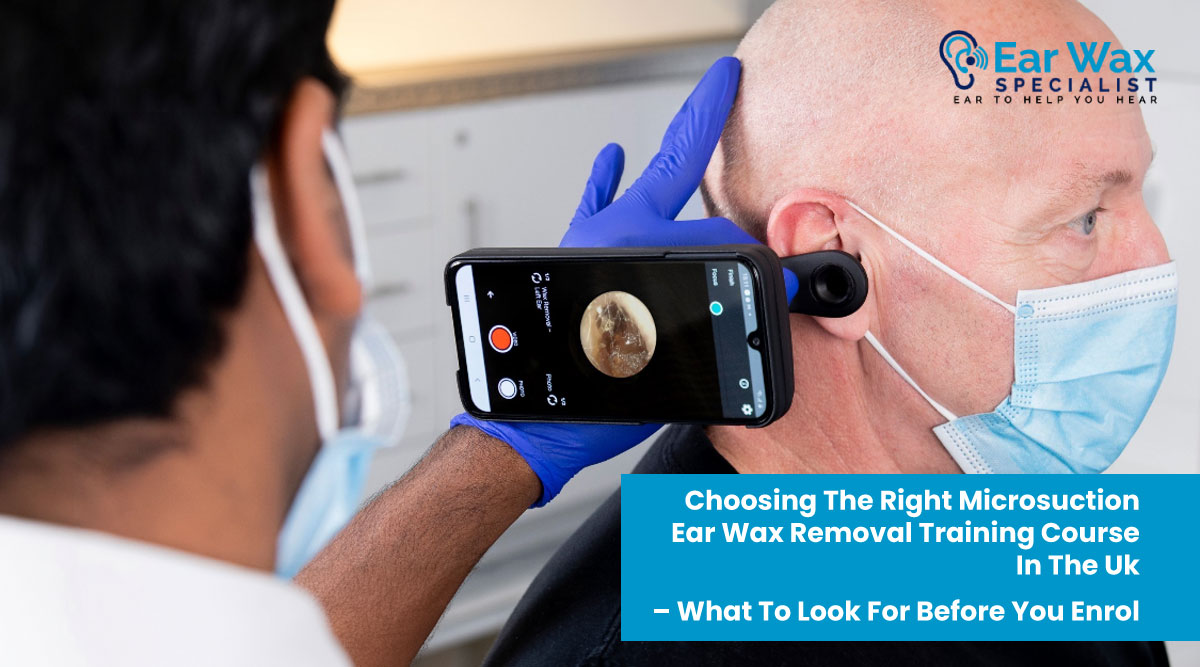
A Microsuction Ear Wax Removal Training Course should give you a clear balance between knowledge and real-world practice, including recognition of contraindications, correct otoscopy technique, and escalation pathways for complications.
Practical vs Theoretical Learning – What Matters Most?
Both have their place. You need to understand the basics of anatomy and infection prevention and control, including equipment decontamination. But confidence comes from using those skills in practice. The best microsuction earwax training courses will have you working on training models and real patients under direct supervision, with competency assessed through observed practice and documented in a logbook. Every ear is different, so the more variety you see in training, the better prepared you’ll be.
Accredited vs Non-Accredited Courses – Know the Difference
An accredited course means your training meets an agreed industry standard. This can often improve your chances of getting a job, good insurance and developing GP confidence. Although non-accredited options may offer credible skills, they may lack the same merit when it comes to future opportunities or meeting some employers’ or insurers’ skills-based defined competencies.
Choosing the Right Training Provider: 5 Key Questions to Ask
Before starting a course, ensure that you are getting value for your time and money.
Who Delivers the Training and What Are Their Credentials?
The person teaching you should have plenty of real-life experience. Ideally the course tutors will be audiologists or ear care professionals who have performed thousands of procedures (or somewhere near) and who have had training in clinical supervision and competency assessment. Their experience will extend beyond the printed guide; assess your skills before patients conclude you are not competent.
Are Hands-On Microsuction Sessions Included?
Practical, hands-on sessions are essential. Make sure the course includes practice on specialist models and on actual patients for skill development where appropriate consent and infection control were applied. Different ear shapes, wax types, and case complexities will give you the confidence to adapt your technique as needed and to know when to stop and refer.
Ear Wax Removal Courses for Nurses: Is It the Right Move for You?
Adding ear care to your existing professional skill set could offer a significant upgrade. An Ear Wax Removal Course For Nurses aims to use your prior medical knowledge while developing the necessary precision skill required for microsuction and ensures that you remain with the scope of practice published by the NMC.
How Nurses Are Expanding Their Practice with Microsuction Skills
Nurses in GP surgeries, community care, and workplace health settings are finding this skill set especially useful. It allows them to treat more patients directly and reduce the need for referrals. If clinical governance and indemnity arrangements are in place, this skill set can also provide opportunities to work in private clinics or mobile services.
What to Look for in an Ear Wax Removal Course for Nurses
A good course for nurses will focus less on the basics you already know and more on the specialist areas of microsuction. Infection control, handling delicate ear structures, and patient reassurance are all key parts of training, along with recognising otological pathology and safe escalation to ENT.
Career Path and Earning Potential After Certification
Once you’re trained, you’ll find several career routes open to you. Some choose to work in established clinics, while others build a mobile service or even open their own practice, but all must maintain ongoing CPD, equipment maintenance, and insurance cover.
How to Become an Ear Wax Removal Specialist UK – Step-by-Step
- Research accredited providers and compare what they offer.
- Complete a recognised Microsuction Ear Wax Removal Training programme.
- Gain as much practical experience as possible under supervision until competence is independently assessed.
- Apply for roles in clinics or pharmacies, or set up your own service, ensuring local policies and referral pathways are followed.
- Keep your skills current with refresher courses and ongoing training.
What Is the Average Ear Wax Removal Technician Salary in the UK?
The earwax removal technician salary depends on location, setting, and patient volume. In most cases, technicians can expect a wide range depending on employment model, location, and demand. Those running their own business, especially in areas with high demand, may earn more.
Final Word
Picking the right course isn’t just about passing an assessment. It’s about making sure you’ve got the skill, knowledge, and confidence to help patients safely while practising within scope, following clinical governance, and keeping your competence under review. With the right training, you can build a career that’s both in demand and personally rewarding.