

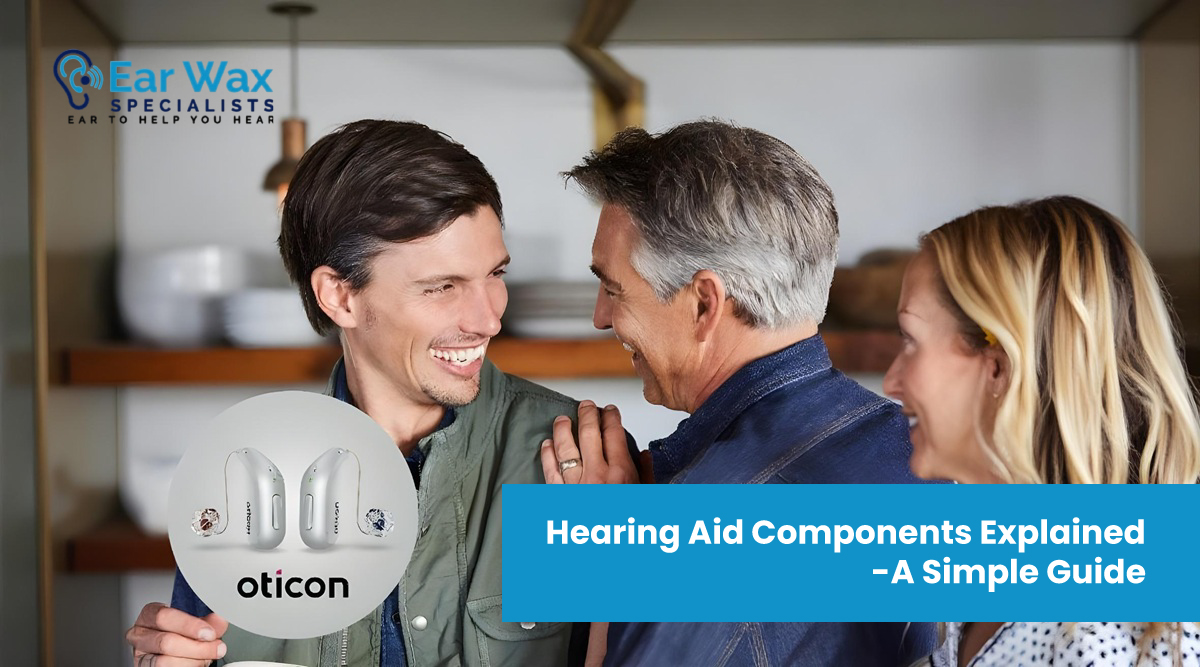
If you or a family member have hearing aids but want to understand the various components inside a hearing aid our lead audiologist has created this simple user guide on what a hearing aid contains and how it helps you to hear better in various listening environments. Below is a easy to understand guide on how a hearing aids works
What Is A Hearing Aid?
A hearing aid is a small device which amplifies your hearing to allow you to hear better. Fundamentally it will take a someone’s hearing test results and apply the correct amplification in the area of your hearing which has deteriorated. Within this however you will find there is a significant level of technology packed in to the devices with noise reduction, connectivity and streaming capabilities, amongst other features all packed in to these tiny devices.

Microphone.
This is the most important part of a hearing aid. The microphone is responsible for picking up sound waves and turning those sound waves in to electrical signals. The great thing about microphones in hearing aids is they are adaptive directional. This allows speech to be picked up far more clearly even in the presence of background noise. The adaptive microphones are constantly changing their directionality and monitoring the environment to pick out the best speech to noise ratio allowing you to hear well in background noise. Furthermore as they are picking up speech they are also at the same time reducing and subduing background noise to give you that all important understanding in busy restaurants.
Amplifier
Once the sound is captured by the microphones it then needs to be adequately amplified in order for you to hear the sound at the correct level. This is done through the amplifier or digital signal processor. The amplifier must increase the volume of the signal it receives from the microphone and duly also understand what sounds need to be amplified and what sounds need to be attenuated. An example of this within hearing loss most patients suffer with high frequency hearing loss and often hose are frequencies that need to be amplified as opposed to low frequency sounds which are often better preserved within the mechanism of hearing lss due to age. Therefore, the hearing aid must make the high frequency sounds louder for you to hear them and at the same time attenuate low frequency sounds which do not require as much amplification.
Receiver
This is the component of your hearing aid which sits inside your ear. This can also be called a speaker. This is the final delivery of the sound cleaned and processed by both the microphone and amplifier before the electrical signal is converted to a acoustic signal in your ear. It is important that the speaker is of a very high quality to allow for the least distortion and the best deliver of sound in your ear. This is sometimes where NHS hearing aids fail as they have hollow open fit tubes sending sound in to the ear canal causing standing waves and distortion of the sound. However, a receive or speaker reduces the distance the sound must travel to the eardrum as it is already sitting inside the ear canal allowing the acoustic sound to travel a lot less further before the eardrum is stimulated with the soundwave.
Power Source
All hearing aids require a power source. This is usually in the form of lithium-ion batteries providing adequate charge to power all the components inside the hearing aids. Most lithium ion charged hearing aids from all the leading manufacturers can now last up to 48 hours on a single charge. Most of our patients leave the hearing aids on charge overnight ready for 24 hours of use the next day.
Domes And Filters
The dome is a plastic grommet which sits on the end of the speaker allowing cushioning and comfort while the hearing aid sits in your ear. Think of the cushions on in ear headphones that allow the headphones to sit comfortably inside the ear. These are made from medical grade silicone and come in various sizes and shapes depending on the size of the ear canal. The filters are also in place to prevent dirt and debris getting in to the speaker and can be changed ad hoc when required.
Connectivity
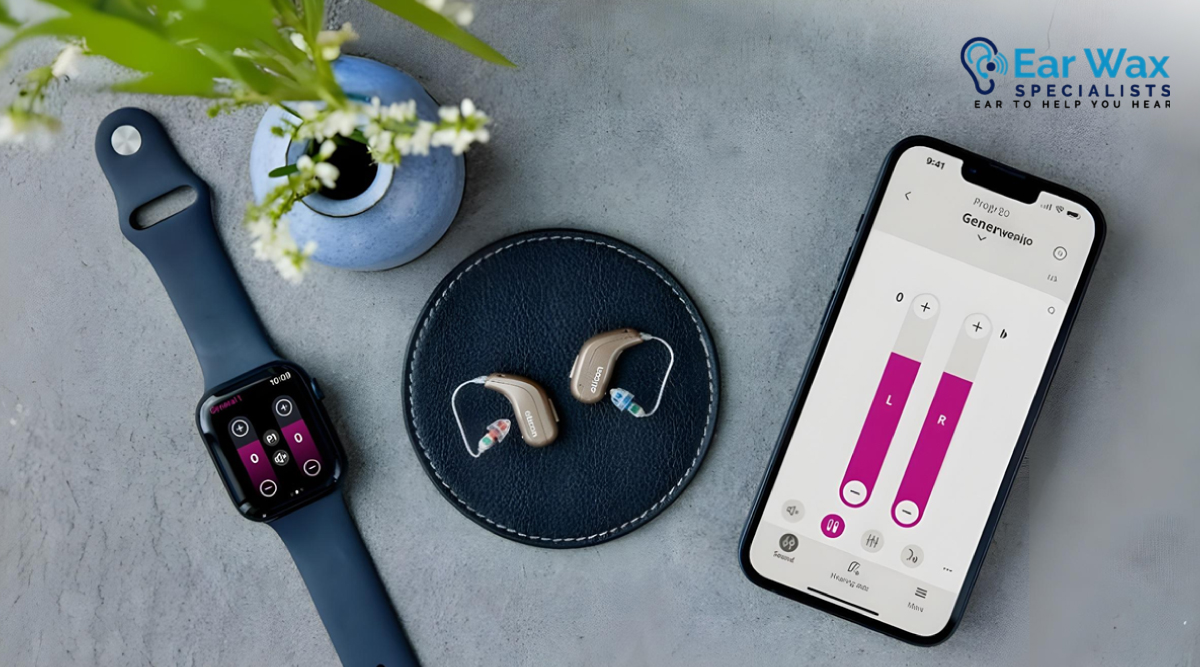
Most hearing aids these days are wireless allowing them to connect to Bluetooth devices. This allows the streaming of television or phone calls directly through the hearing aid at the level of your prescription. This has made taking phone calls watching the television perfectly and listening to music perfect. Gone are the days when you are putting a phone to your ear trying to find the closest contact to your hearing aid. Most devices are now also moving over to the new aura cast technology which is available in theatres banks and auditoriums allowing your hearing aids to connect automatically so you can hear a speaker or a watch a play even if you are sitting in the backrow,
Programming
Alas the most important feature of any hearing aid is the audiologist himself. With all this technology it can only be utilised to its most effective capabilities if it is fitted correctly. A hearing aid should be fitted using best practises including real ear measurements taking accurate reading from the ear canal in order to deliver the best quality of sound. Even the best hearing aids with significant advancements still require sizeable adjustments after initial fit to ensure all features like noise reduction and fine tuning the prescription are undertaken to ensure optimal sound quality. This is where your audiologist and their experience plays a key part in ensuring the best results. The aftercare and ongoing maintenance of the units plays a significant part in your overall hearing quality and experience.
Conclusion : Small Devices Big Punch
It always amazes us how hearing aid technology has evolved and is evolving since we first started fitting hearing aids almost 20 years ago. The advancement in microchip capabilities has allowed for millions of processes to take effect in hearing aids every second in the device to give you optimal hearing in even the most strenuous hearing environment. There is no longer a need to fear the next family gathering or the next social lunch. With hearing devices on your ears you will tackle most of lives conversations with ease. Learn more about hearing aid prices and what they offer
If you would like to know more then get in touch with us at the earwaxspecialist.co.uk so we can help you with your journey to better hearing.