Table of Contents
ToggleAcross the UK, more people are asking where they can get safe, effective ear care without long waits. Not long ago, earwax removal was something most people could get done easily through the NHS. But in recent years, many GP surgeries have stopped offering the service. As a result, patients are now looking for faster, more accessible options, which is creating a real gap in the market. This change has paved the way for skilled practitioners in ear care to take their place. If you are interested in how to become an earwax removal specialist in the UK, you are going to find it a role that is in demand and rewarding and with opportunities for growth.
The Growing Demand for Earwax Removal in the UK
Why More Patients Are Searching for “Ear Wax Removal Near Me”
A quick online search for “earwax removal near me” or “free earwax removal near me” shows just how common this need has become. Many people discover that home remedies don’t always work and can even make the problem worse. Many people don’t realise that using cotton buds can actually push earwax further into the ear canal, making the problem worse. The NHS and ENT UK also discourage ear candles for a number of reasons. They can cause burns and blockages, and more serious issues can occur from using them. For these reasons people are seeking trained professionals who use safe, evidence-based methods, such as microsuction. In fact, clinics that offer same-day or next-day appointments are often booked up quickly because of the growing demand.
NHS Service Gaps and the Rise of Private Ear Care Clinics
Ear irrigation, previously common in GP surgeries, is now far less available, and ear syringing is no longer recommended due to a higher risk of injury. Some patients still ask, “Where can I get my ears syringed?” but are told that earwax removal is no longer provided by the NHS in their area. Due to the lengthy waiting lists and a shortage of NHS clinics, private providers are popping up to fill the gap, often providing flexible hours, trained staff, and appropriate equipment. Nevertheless, the initial assessment of the patient remains crucial, as the need to refer the patient to ENT for possible treatment in the clinic and whether they actually fulfil the referral are important. There are certain cases, for example, a perforated eardrum (Patent Tympanic membrane), an active ear infection (Otitis externa), recent ear surgery, or certain conditions of the ear canal, that potentially require direct referral to ENT as opposed to treatment in clinic.
How “Free Ear Wax Removal NHS” Searches Reveal an Urgent Need
Search terms like “free ear wax removal NHS” remain popular, but for many patients the outcome is disappointing. They may be advised to use olive oil drops for several weeks before an appointment becomes available. This service gap has pushed more people toward private care. For those trained in safe removal techniques, this represents a steady flow of clients seeking timely help.
How to Become a Qualified Earwax Removal Specialist
Overview of Microsuction Earwax Removal Training Courses
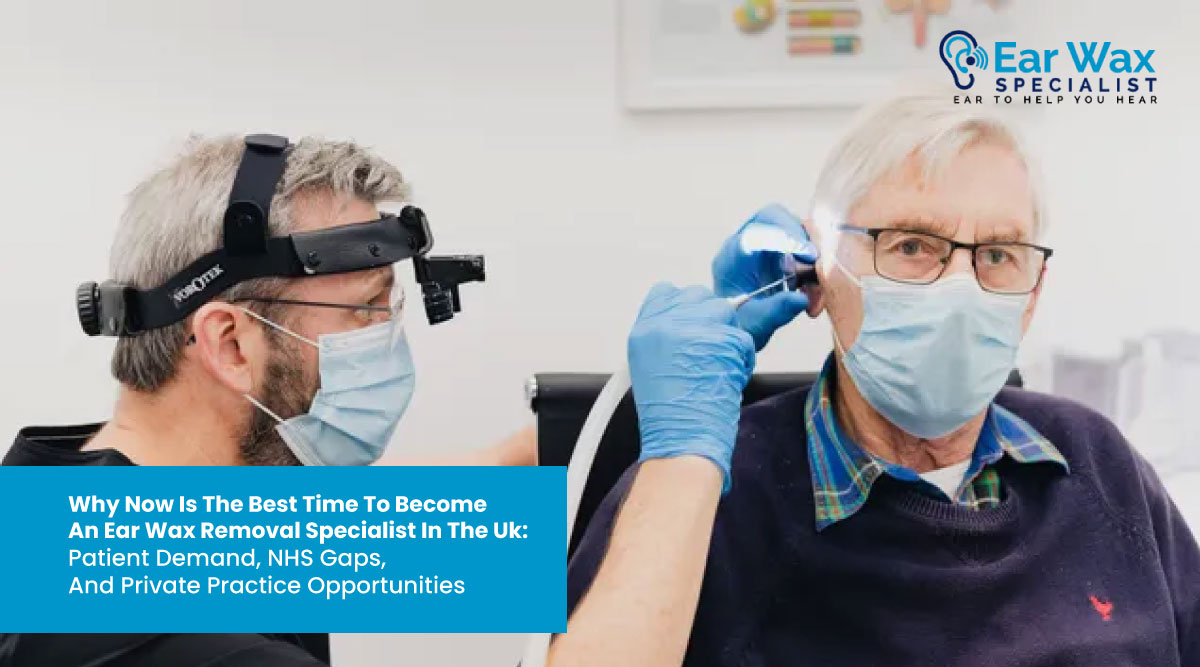
Microsuction is widely considered to be one of the safest and most effective ways to remove earwax when performed by a trained practitioner. There may be some mild, transient side effects, such as dizziness or discomfort, but risks are low when standard operating procedures for microsuction are adhered to. Training for microsuction includes a thorough understanding of ear anatomy, health conditions that are related to earwax removal, and infection control, as well as the use of equipment. The need also exists for practitioners to understand how to identify issues and when to refer patients for ENT services. A high-quality course combines theory with supervised practice on both models and real patients.
What to Expect from a Microsuction Earwax Training Programme?
Most programmes run over a full day, but achieving true competence usually requires additional supervised clinical practice. Trainees observe live patient cases, learn to assess each ear, explain risks and benefits, and maintain accurate treatment records. Many courses also teach ear irrigation, providing an alternative when microsuction isn’t suitable. By the end of training, participants should feel confident using both methods and working safely within their professional limits.
Who Can Take a Microsuction Earwax Removal Training Course?
Earwax Removal Course for Nurses and Healthcare Professionals
Nurses, audiologists, hearing aid dispensers, and other registered healthcare professionals often add earwax removal to their skills, enabling them to provide a more comprehensive service in clinics, pharmacies, or mobile settings. Training for these practitioners is about perfecting safe techniques and recognising those patients that require specialist referral.
Do You Need a Medical Background to Get Started?
You do not need to have a medical background to be accepted as a trainee. However, all trainees have to undertake a certified course and demonstrate competence. Insurers and training organisations prefer, or require, a healthcare qualification, although some will accept people who do not have healthcare qualifications only if they agree to work under an appropriate clinical governance framework. Those without healthcare experience typically need extended supervision and must have adequate insurance and clear patient referral pathways. Above all, safety and awareness of professional limits are essential.
Earning Potential and Career Progression
Earwax Removal Technician Salary Expectations in the UK
Earnings vary based on location, working hours, and whether you are employed or self-employed. You can expect to earn a salary between the mid-£20,000s to over £40,000 for a full-time position in a private clinic. Self-employed practitioners typically earn more in high-demand areas and can charge more for home visits and evening or weekend appointments. Trust is important and developing a business through repeat visits is key.
Setting Up a Private Earwax Removal Service in Your Area
Some practitioners rent from an established clinic and others have a room in their house. You can also run a completely mobile service. To set up at home, you need adequate insurance, an infection control strategy, and equipment. You will also need to record and track whatever it is you record, make arrangements for follow-up (if needed), and provide a clear referral pathway. Continuing professional development (CPD) should be ongoing to ensure you continue providing safe and appropriate levels of service. With so many people searching for “private earwax removal near me”, building a client base can be quicker than you think.
Is Now the Right Time to Get Trained?
Now is a great time to enter the profession of ear care, with NHS provision declining and public awareness of professional ear care on the rise, as long as you work with an approved training provider, get clinically supervised practice experience, and practice in a safe way. Getting started early allows you to establish strong credibility, trust and recognition from your patients, and subsequently the level of client, which is vital in such a niche.
The Benefits of Early Entry into a Growing Field
The ear health market is growing fast, and in many areas, demand is now exceeding the available services. Entering this sector now allows you to create a local reputation and a loyal clientele and hone your skills before it gets too congested. With an ageing population and a higher awareness of safe methods of earwax removal, the demand is likely to continue for some time.
Closing Thoughts
The UK’s need for safe, professional earwax removal has never been greater. NHS cuts have created a gap in provision, and private providers are moving in to fill the void. If you’re thinking about becoming a UK earwax removal specialist, now is a good time. You can have a positive and sustainable career by completing recognised training, working with proper supervision, and keeping the safety of the patient paramount. If all goes well, you will be positively contributing to your clients and community.