
Table of Contents
ToggleActing Fast Can Make All The Difference
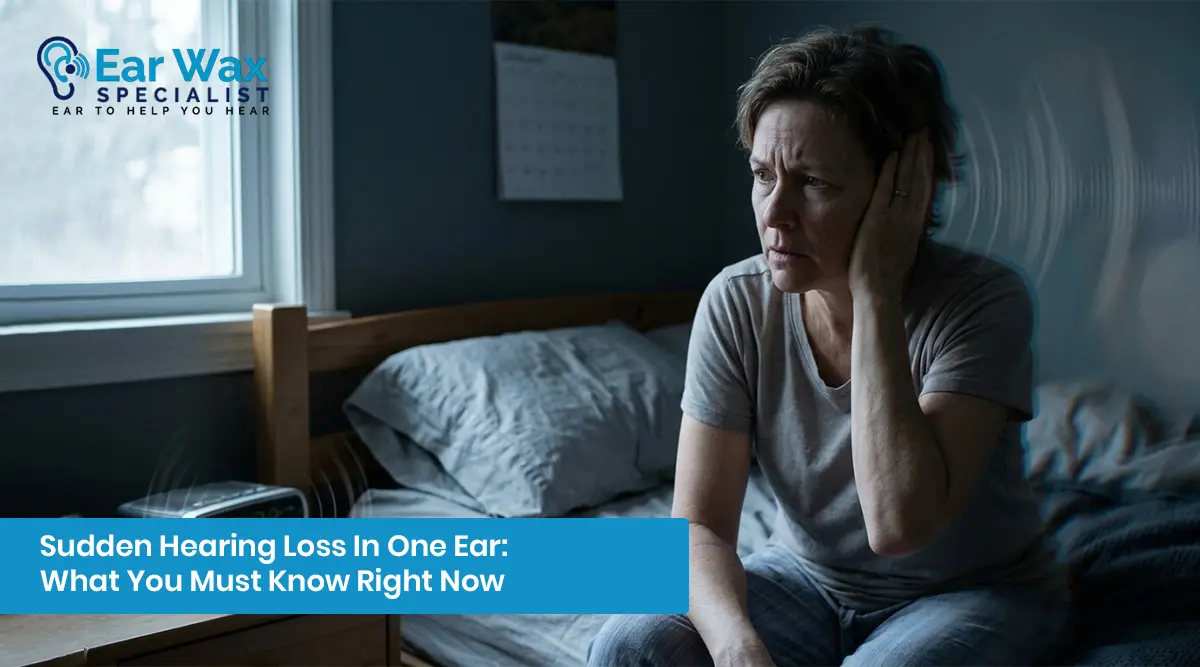
Have you ever had a time when you suddenly noticed that your hearing wasn’t right? You might have answered the phone and not been able to hear well on one side, or you might have woken up and not been able to understand sounds that were perfectly clear the day before. These things can be scary, and if they sound like what’s happening to you right now, you need to know that you might be having a medical emergency called sudden sensorineural hearing loss. This condition is widely recognised as an otologic emergency requiring urgent evaluation and treatment.
How quickly you respond can be the difference between retaining your hearing and losing it permanently. Patients who get therapy within the first two days do much better than those who wait. Sadly, too many people ignore their symptoms, thinking they only have a blocked ear from ear wax or assume that the hearing will improve with olive oil drops.
Early corticosteroid treatment within 48–72 hours is strongly associated with improved hearing recovery outcomes. This extensive guide will teach you all you need to know about this sudden phenomenon, from how to spot the indications to how to get the best treatment and what your chances of recovery are.
What Makes This Type Of Hearing Loss Different?
The Clinical Picture
Audiologists and ENT specialists talk about sudden sensorineural hearing loss (commonly shortened to SSNHL) when it meets a certain clinical criteria. Fundamentally there are two types of hearing loss: A conductive hearing loss and a sensorineural hearing loss.
A sensorineural hearing loss is caused by the death of hair cells which help transmit and detect sound waves in the cochlea. This is often more permanent damage that cannot be rectified.
A conductive hearing loss can be temporary caused by infections of the outer/middle ear, operations, or anything which may prevent the transmission of sound into the cochlea effectively.
A sudden onset sensorineural hearing loss is characterised by
- Speed of onset: The hearing loss happens quickly, usually within three days, although in many cases, it happens overnight.
- Severity: The decline is at least 30 dB, which can be measured.
- Frequency span: When tested, the loss impacts at least three pitch ranges that are next to each other.
SSNHL is clinically defined as a hearing loss of ≥30 dB across at least three consecutive frequencies occurring within 72 hours. To put this in context, 30 decibels is the difference between a whisper and a typical conversation. That’s a big alteration that most people notice right away.
The time period and pattern of this ailment are what make it different from the gradual hearing loss that many people suffer as they get older. Age-related hearing loss happens progressively over many years and usually affects both ears the same way. In contrast, SSNHL happens suddenly and only affects one ear in about nine out of ten instances.
Healthcare data shows that about 1 in 5,000 to 10,000 people will have this illness each year, however the actual percentages could be greater as many cases go unreported.. Adults in their 40s and 50s are at the most risk, but anybody can present with it, men and women are equally likely to get it.
Why The Type Of Hearing Loss Matters Enormously
Not all sudden hearing issues need to be dealt with right away. Knowing whether you’re dealing with a mechanical blockage or nerve injury will help you figure out how long you have to act and what kind of treatment you need.
Mechanical (Conductive) Hearing Problems
Your ear has two primary parts: the outer and middle parts, which send sound waves to the inner part, which processes them. When something gets in the way of the sound channel, such a lot of earwax, fluid buildup from allergies or colds, or an ear infection, you have conductive hearing loss.
These circumstances are definitely annoying and hard to deal with, but they are usually easy to fix. Hearing comes back once you clear the blockage or cure the illness. There is time pressure, but not as much as there used to be.
Nerve-Related (Sensorineural) Damage
There are thousands of microscopic sensory cells in the inner ear that look like hair cells. These cells turn mechanical vibrations into electrical nerve signals that your brain interprets as sound. Sensorineural hearing loss happens when these cells or the neuronal routes that connect them are damaged.
Damage to cochlear hair cells is generally irreversible in humans, making early intervention critical. The most important difference is that these sensory structures don’t grow back once they’re gone, they can’t come back. This is why speed is so important: if you can intervene when the cells are hurt but short of organic hair cell death, they can heal. If you wait too long, the chances of recovering your hearing will be permanent.
How Professionals Tell the Difference
A diagnostic hearing test can precisely differentiate the difference between these two categories. A simple hearing test with tympanometry ( a test which checks middle ear pressure) will give enough information to your audiologist for immediate referral to ENT.
This is why “waiting to see what happens” is so dangerous. You could be wasting valuable time that could be used to treat your hearing loss.
How To Recognise This Condition: Symptoms That Demand Urgent Attention
The symptoms are usually quite clear
- Sudden feeling of fullness and loss of hearing in one ear
- A quick and rapid change within a few hours
- Can present with tinnitus or balance issues if it is a viral infection of the inner ear.
- Tinnitus (possible)
- Dizziness (possible)
The timeline is the most important difference: this isn’t something that’s been getting worse over the course of weeks or months. It’s fresh, it happened quickly.
Associated Symptoms To Watch For
Phantom sounds (Tinnitus)
According to clinical investigations, more than 90% of patients who have SSNHL also have tinnitus. You hear sounds that aren’t coming from your ear manifesting as a ringing, humming, static, whistling, or even more complicated sound. For a lot of patients, the tinnitus begins before the hearing loss is visible, acting as an early warning. Tinnitus is reported in approximately 70–90% of SSNHL cases.
Sensation of ear pressure or fullness
Patients presenting in the clinic often say that their ear feels like it’s full of cotton or needs to “pop” like it does when they travel in a plane. This feeling makes a lot of people think they have earwax or sinus congestion at first, which makes them wait to get the right care.
Balance disruption or spinning sensations
Your inner ears do more than simply help you hear; they also help you keep your balance. When the parts of the body that help us hear get hurt, it can also compromise our equilibrium. Some individuals feel a little unsteady, while others get severe vertigo that makes them feel like the room is spinning and feel nauseous.
Auditory Distortion
Even if some hearing ability is still there, sounds that go through the damaged ear may sound different in quality i.e. tinny, robotic, or echoey.
What This Condition Is Not
It’s just as crucial to know what doesn’t fit the SSNHL pattern:
- Hearing that has been getting worse progressively over a long time
- Problems with hearing in both ears that happen at the same time
- Hearing problems that come with ear discharge or significant pain (more likely to be an infection)
- Hearing that is muffled but gets better when you yawn or swallow (this means there is a problem with the Eustachian tube)
If you have the typical SSNHL symptoms listed above, it’s best to address it as an emergency, even if you think it might just be something harmless like wax. Only a professional exam can safely make that call, and the penalty of being wrong is too high to take the chance.
The Window Of Opportunity: Why Hours Matter
The Science Behind Treatment Timing
The guidelines set out by NICE are notcautious when they stress how important it is to respond quickly to SSNHL. The urgency is based on strong proof of when treatments work and when they don’t. UK NICE guidelines recommend urgent (within 24 hours) specialist assessment for sudden hearing loss.
Research monitoring patient outcomes has revealed a distinct trend: persons who initiate treatment within 48 hours of symptom onset attain significantly superior results compared to those who delay. This benefit decreases rapidly after 72 hours, with results deteriorating; after one week, they are considerably worse; and beyond two weeks, the primary medical treatment loses much of its efficacy.
Why is timing so important? The answer lies in what’s going on inside the cells. When SSNHL happens, the sensitive sensory cells in your inner ear get a lot of stress from inflammation, a lack of blood flow, a probable viral infection, or other problems. In the beginning, these cells may be hurt but still alive and able to heal if the root cause is found and fixed quickly.
But if the damaging conditions continue, cells start to die. They can’t grow back or be replaced once they die. They can’t come back with medicine, surgery, or treatment. The short time when treatment can help is when cells are still hurt but can be saved.
What Recovery Statistics Tell Us
When we look at outcomes for big groups of patients, we find that about two-thirds of those who get treatment right away have a significant recovery, either full restoration of hearing or a lot of improvement. That’s a very positive number, especially when we’re talking about nerve injury. Spontaneous or treatment-assisted recovery occurs in approximately 32–65% of patients.
But, and this is really important, these favorable numbers mostly apply to people who got help right away. If you wait to get treatment, your chances of being in that two-thirds recovery group go down a lot.
There are a number of things that affect a person’s prognosis:
- Initial severity: Ironically, having more severe hearing loss at the start frequently means that the end result will be worse.
- Age: Younger patients seem to have better outcomes, however SSNHL can be effectively treated in all age groups.
- Balance symptoms: Unfortunately, having vertigo together with hearing loss makes it less likely that you will get better.
- Audiogram characteristics: The way hearing loss affects different frequencies might provide doctors hints about how the disease will progress.
- Treatment delay: The most crucial thing you can control is how long it takes to get treatment.
That last aspect needs to be stressed. You can’t change your age, how bad the beginning is, or whether you get vertigo. You can definitely control how fast you get treatment.
What To Do Right Now: Your Action Plan
If you’re reading this because you’ve suddenly lost your hearing, here’s what you need to do right now.
Priority One: Get Medical Attention Today
Don’t put it off until tomorrow. Don’t wait to see if it gets better. Don’t think it’s just a cold or wax. Call your GP’s surgery right away and tell them that you suddenly lost hearing in one ear and that you know this needs to be looked at very away.
The National Institute for Health and Care Excellence (NICE) says that abrupt hearing loss needs to be checked out within 24 hours. Your GP’s surgery should have rules in place for making same-day appointments for this presentation.
If you can’t get a same-day appointment with your GP, go to your local A&E department. Emergency rooms aren’t primarily for hearing difficulties, but they can and should start treatment and send patients to specialists for SSNHL. When you get there, make it obvious that you have “sudden hearing loss.” This exact phrase should make it evident how urgent the situation is.
Priority Two: Begin Medical Treatment Immediately
Corticosteroid medicine, usually oral prednisolone, is the most important part of treating SSNHL. Medical standards say that you should start this medication right away, even before you see an ENT surgeon or have any specialist tests done. Systemic corticosteroids are considered the first-line treatment for idiopathic SSNHL.
Your GP has the right and the duty to prescribe prednisolone based on the symptoms you show. A typical regimen starts with high doses for about a week, then slowly lowers the doses during the next week.
Don’t put off starting steroids until you get an appointment, a scan, or confirmation from a doctor. Starting treatment a few hours earlier could make a big difference in how things turn out.
Understanding The Treatment Landscape
Steroid Therapy: The First-Line Approach
Corticosteroids operate by lowering swelling and inflammation in the inner ear. They might also help blood flow to the injured area and help cells heal. Even though it is not fully understood how they work, clinical evidence shows that steroids clearly improve outcomes when given quickly.
Oral prednisolone is the usual treatment in the UK. Common protocols use
- Lasts about a week at full dose
- Gradually reducing the dose over the course of a second week to avoid steroid withdrawal symptoms
Side effects from this short course are usually modest and go away on their own. They can include a bigger appetite, trouble sleeping, mood swings, and higher blood sugar. Most patients are okay with these trade-offs, given what’s at stake.
Alternative Delivery: Intratympanic Injections
In some cases, steroids can be injected through the eardrum directly into the middle ear space. When this method, known as intratympanic or transtympanic injection, is suggested, it may be used when:
- Oral steroids are not medically acceptable (for instance, in individuals with poorly managed diabetes).
- Oral steroid therapy has not worked well enough.
- As a supplementary therapy in conjunction with oral steroids for severe instances
The process starts by numbing the eardrum and then carefully injecting steroid solution through it into the middle ear cavity. The medicine then spreads to the structures in the inner ear. This sends a high concentration directly to the target spot while reducing adverse effects throughout the body.
Intratympanic steroid therapy is recommended as salvage or adjunct treatment in SSNHL cases.
https://pubmed.ncbi.nlm.nih.gov/24013074/
Additional Investigations
Your doctors may suggest a number of tests to find out what is causing the problem, such as:
- MRI scans to rule out structural abnormalities like auditory neuroma (a benign nerve tumour) or other anatomical difficulties
- Blood tests to find diseases including autoimmune disorders, infections, or metabolic difficulties
- Detailed audiological assessment to more accurately define the pattern of hearing loss.
What About Other Treatments?
You might come across information regarding additional treatments, such as antiviral drugs, hyperbaric oxygen therapy, or dietary supplements. There isn’t a lot of strong evidence for these interventions. Steroids are still the only treatment with strong evidence to back it up, and it is not a good idea to wait or switch to unproven alternatives.
The Recovery Process: What To Expect
Timeline And Patterns
Different people have extremely different timelines for recovery. Some lucky people see improvement in just a few days after commencing treatment. Some others see more modest improvements over the course of a few weeks. Most of the time, the best recovery happens between two and four weeks, but some little improvements may keep happening for a few months.
Your ENT team will set up follow-up hearing tests at certain times, usually one week, one month, and six months following the first test, to keep track of your recovery objectively. Many patients undergoing follow-ups may also explore hearing tests birmingham services for monitoring.
Possible Outcomes
There are numerous types of SSNHL outcomes:
- Complete recovery: Your hearing goes back to how it was before SSNHL. This is the best-case scenario, and it happens to a large number of patients who get treatment right away.
- Partial recovery: Hearing becomes a lot better but doesn’t go back to normal. You may still have some high-frequency loss, a slight loss across all frequencies, or other patterns of not fully recovering.
- Minimal or no recovery: Sadly, some patients don’t get any better even with the best care. This result is more likely to happen if there was a lot of loss at first, therapy was delayed, and vertigo was present.
- Spontaneous recovery: It’s important to remember that some cases of SSNHL get better on their own. But you can’t know if yours will fall into this group, and it’s highly unwise to bet on spontaneous healing and not get treatment.
When Hearing Doesn’t Fully Return: Your Options
If you still have any hearing loss after your recuperation has levelled off, contemporary hearing aids can greatly improve your quality of life. Many patients explore hearing aids birmingham or hearing aid centre birmingham services for support.
Hearing Solutions For One-Sided Loss
Complete single-sided deafness
CROS (Contralateral Routing of Signals) systems are a great way to deal with hearing loss in one ear. These have a microphone on the side of your deaf ear that picks up noises and sends them wirelessly to a hearing device on the side of your hearing ear. This lets you hear sounds from your deaf side without the unnatural quality of sounds that go through your skull.
Partial residual hearing
If you still have some hearing in the ear that is impaired, regular hearing aids can work quite well. With modern digital technology, you may program your hearing aid to fit your exact hearing profile, boosting only the frequencies and volumes you require and leaving the rest alone.
The Ear Wax Specialist’s Comprehensive Hearing Aid Services
We offer full hearing aid services at both of our Birmingham and Sutton Coldfield facilities at The Ear Wax Specialist:
- Unbiased, independent advice: We work with all the main hearing aid brands, such as Phonak, Oticon, Widex, Signia, Starkey, ReSound, and others, so you can trust us. This implies that the suggestions we make are only based on what works best for your needs, budget, and way of life, not what we have in stock.
- Professional fitting and verification: We utilise a method called real ear measurement to make sure that hearing aids are actually giving you the proper amount of sound by measuring sound levels right at your eardrum. This objective technique makes sure that the best performance is achieved instead of just depending on subjective impressions.
- Tinnitus management features: Newer hearing aids come with advanced tinnitus therapy programs. Tinnitus often lasts after SSNHL, thus comprehensive management is especially helpful.
- Ongoing support and adjustments: Hearing aid fitting isn’t a one-time thing; it needs ongoing assistance and changes. We offer ongoing care that includes regular checkups, making adjustments as your needs change, maintenance, and troubleshooting.
- In-house ENT consultation: We have an ENT consultant on staff who can help with cases that need more than just a conventional audiological evaluation.
Patients often explore hearing aids sutton coldfield or hearing aid centre sutton coldfield options for more localised care.
Managing Persistent Tinnitus
Many people who survive SSNHL still have problems with tinnitus, even when their hearing gets better. Here are some ways that can help:
- Hearing amplification itself (often makes tinnitus less noticeable by making the sounds around you more interesting)
- Sound therapy and masking with hearing aid features or separate devices
- Counselling and cognitive techniques to alleviate tinnitus-associated discomfort
- Ways to relax and deal with stress
- Avoiding silence (background noise makes tinnitus less noticeable)
Along with our hearing services, we also help with tinnitus assessment and management.
Reducing Your Risk: Prevention And Monitoring
Can SSNHL (Sudden Sensorineural Hearing Loss) Be Prevented?
In most situations, SSNHL happens for no known reason (idiopathic), hence it is hard to stop it from happening. But there are several broad steps that can lower the risk overall:
- Cardiovascular health: High blood pressure, high cholesterol, and diabetes are all conditions that impact blood vessels and have been linked to a higher risk of SSNHL. It makes sense to manage these issues in the best way possible for both hearing and general health.
- Avoid smoking: Smoking harms blood vessels and circulation, which may raise the risk of SSNHL among other adverse effects.
- Protect from noise: Even though noise-induced hearing loss is different from SSNHL, it’s always a good idea to keep your hearing safe from too much noise.
- Manage stress: There is some evidence that stress might be a factor in SSNHL, but this is yet not confirmed.
The majority of SSNHL cases are idiopathic, with no clearly identifiable cause.
The Value Of Regular Hearing Monitoring
Setting up baseline hearing data through regular tests may be the most useful way to prevent problems. When things change suddenly, having past results to compare them against lets you:
- Recognising that something has changed more quickly
- A more accurate diagnosis
- Better tracking of progress or recovery
- Finding little changes earlier, before they become a problem
We recommend hearing assessments:
- For healthy persons over 50, every two to three years
- Once a year for persons who are at risk for heart disease or have been exposed to loud noise
Immediately after any rapid changes in hearing, ringing in the ears, or balance
To set up your baseline assessment, please call our Birmingham or Sutton Coldfield clinic. You may make an appointment on the same day, and the full test takes less than an hour.
Common Questions About Sudden Hearing Loss
Is It Definitely SSNHL, Or Could It Be Earwax?
You can’t tell the difference between these without a professional exam. Earwax usually builds up slowly and can sometimes be seen in the ear canal. SSNHL generally comes on suddenly and doesn’t seem to be blocked. But trying to diagnose yourself wastes a lot of time. A professional assessment promptly and clearly finds the cause.
We can quickly tell at The Ear Wax Specialist if earwax is causing your symptoms or if you need to see an ENT right away for probable SSNHL. We can see you the same day for critical circumstances like yours.
Should I Really Go To A&E For A Hearing Problem?
Yes, if you can’t get a same-day appointment with your GP and you suddenly lose your hearing. A&E professionals can start steroid medication and set up an urgent ENT referral, both of which are time-sensitive processes. When you talk about your condition, make sure to use the exact phrase “sudden hearing loss.” This should set off the right procedures.
Could This Happen Again?
It is rare for the same ear to have the same problem again. Some people, on the other hand, do get SSNHL in the other ear months or years later. If you’ve experienced SSNHL before, keep an eye out for any new hearing problems and get checked out right away if symptoms come again. Regular hearing checks help find changes promptly.
Will I Definitely Need Hearing Aids?
It depends on how well you are recovering. About two-thirds of patients who get treatment right away fully or mostly recover and don’t need amplification. Hearing aids can make a big difference if you still have hearing loss that makes it hard to do everyday things after healing has stopped.
Assessment usually happens six months after the commencement of the illness, when healing is complete. We’ll do a lot of tests to see if amplification would help you and go over all the alternatives with you.
Will The Tinnitus Ever Stop?
Tinnitus usually gets better when hearing becomes better. But some people still have tinnitus even after their hearing gets back to normal or almost normal. The good news is that there have been a lot of improvements in how to deal with tinnitus. Most people can get a lot of comfort from a mix of hearing aids, sound therapy, counselling, and getting used to the sounds.
As part of our hearing services, we offer full examination and management of tinnitus.
Take Action Now
If you suddenly lose your hearing:
Stop Reading And Take Action Immediately:
- If you suddenly lose your hearing, call your GP surgery and ask for an urgent appointment the same day.
- If same-day GP access isn’t available, attend A&E
- Start taking the recommended steroids right away.
- Contact The Ear Wax Specialist for same-day diagnostic hearing assessment
Contact The Ear Wax Specialist:
- Hearing Care in Birmingham
- Sutton Coldfield Hearing Care
We Offer:
- Same-day appointments for urgent cases
- Comprehensive diagnostic testing (audiometry, tympanometry, speech testing)
- Immediate results and expert interpretation
- Urgent ENT referral when indicated
- In-house ENT consultant availability
- Complete hearing aid services from all manufacturers
- Tinnitus assessment and management
- Specialist earwax removal when appropriate
- Ongoing hearing care and support
Don’t wait. Don’t hope it improves on its own. Don’t assume it’s something minor.
When sudden hearing loss strikes, the actions you take in the next few hours could determine whether you keep your hearing or lose it permanently.
Call us now.
Author Detail
Written by: Mohammed Khizar
Medically Reviewed by: Mohammed Khizar
Medical Disclaimer
This article provides health information for educational purposes. It does not constitute medical advice and is not a substitute for professional medical consultation. If you are experiencing sudden hearing loss, seek immediate medical attention from your GP, A&E, or a qualified audiologist.
References
1: Chau JK, Lin JR, Atashband S, Irvine RA, Westerberg BD. Sudden Sensorineural Hearing Loss. In: StatPearls [Internet]. Treasure Island (FL): StatPearls Publishing; Jan 2023 [Accessed 24 Jan. 2023]. Available from:
https://www.ncbi.nlm.nih.gov/books/NBK536521/
2: Stachler RJ, Chandrasekhar SS, Archer SM, et al. Clinical Practice Guideline: Sudden Hearing Loss. [Internet]. [Accessed 24 Jan. 2023]. Available from:
https://www.ncbi.nlm.nih.gov/books/NBK557631/
3: National Institute for Health and Care Excellence (NICE). Sudden Hearing Loss. Clinical Knowledge Summary [Internet]. [Accessed 24 Jan. 2023]. Available from:
https://cks.nice.org.uk/topics/hearing-loss-sudden/
4: Cunningham LL, Tucci DL. Hair Cell Regeneration and Repair in the Mammalian Cochlea. Front Cell Neurosci [Internet]. 2014 [Accessed 02 Dec. 2024]. Available from:
https://www.ncbi.nlm.nih.gov/pmc/articles/PMC4130149/
5: Spear SA, Schwartz SR. Intratympanic Steroids for Sudden Sensorineural Hearing Loss. [Internet]. [Accessed 02 Dec. 2024]. Available from:
https://pubmed.ncbi.nlm.nih.gov/24013074/