
Blog Summary
Earwax is a crucial part of ear hygiene; however, misconceptions about earwax removal methods pose a serious health hazard. Cotton swabs, Q-tips, and ear candles are some of the most widely misconstrued health tools. This article will answer the question of are ear candles safe and proceed to outline the health risks and the recommendations provided by the NHS. Understanding safe earwax removal methods UK helps protect hearing and prevents avoidable ear health problems.
Introduction
Earwax removal is something most people feel confident doing themselves. It seems simple enough.The difficulty is that many normal practices regarding ear hygienics have been predicated upon assumptions that prove to be medically flawed. Over the course of time, these earwax removal myths have the possibility of escalating the risk of obstruction, infection, or hearing complications. This blog looks at why earwax exists, where things go wrong, and why certain popular methods are best avoided.
Understanding Earwax: Why It Exists And When It Becomes A Problem
Earwax, also known as cerumen, is produced in the ear canal by glands in the ear. According to MedlinePlus, earwax plays a protective role by trapping dust and bacteria. It also keeps the skin inside the ear slightly moisturised, which helps prevent irritation and cracking.
In most cases, ears are able to deal with ear wax on their own. The ear canal pushes the wax out and even helps in this process through movement caused by talking or chewing. The wax will easily fall off once it reaches the outer ear. The wax will readily come off when it reaches the outer ear. However, the problems begin when the process does not work the way it should. For example, the wax may accumulate and harden and even become impacted. This is when people usually start looking for “earwax removal near me” since there may be changes in their hearing.
Common Myths About Earwax Removal That Can Increase Health Risks
One of these myths is that ears require frequent deep cleaning. Another myth is that earwax is bad for ears and must therefore be removed completely. Such statement appear logical, but they are misleading. The fact is that frequent intervention can lead to more problems than benefits.
Some individuals think that if it causes you discomfort, you have to take it out at home. Others assume all methods sold online or in shops are safe. These earwax removal myths can delay proper care and increase the chance of injury or infection.
Why Shouldn’t You Use Cotton Buds To Clean Your Ears?
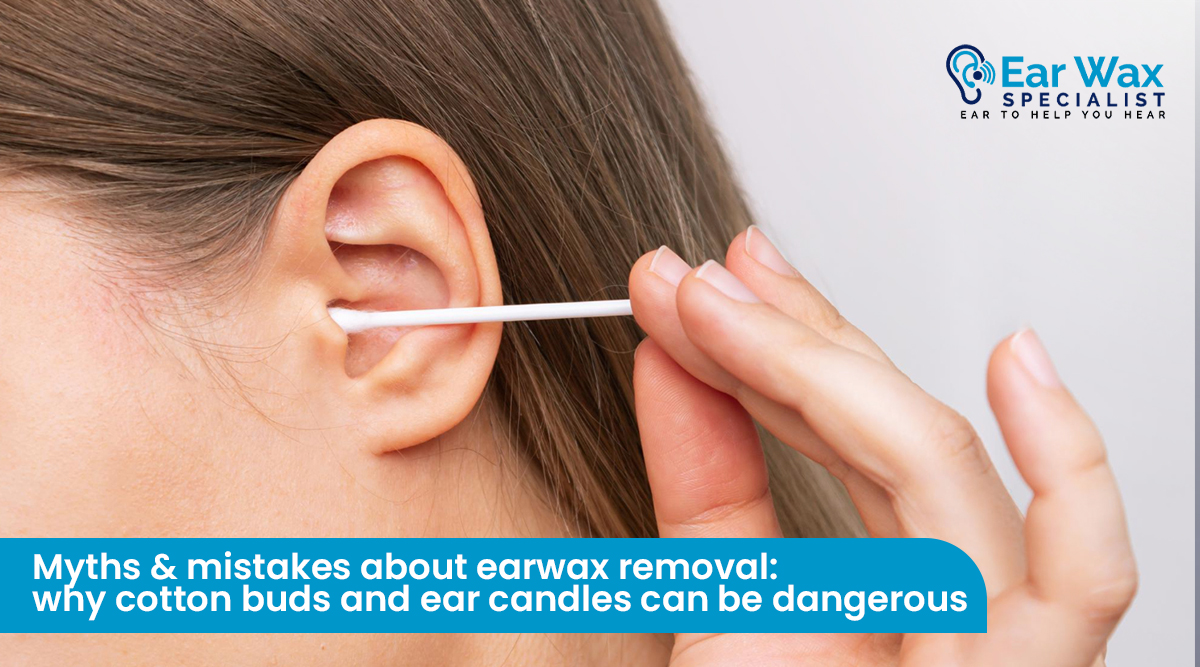
Cotton buds are probably the most widely used ear cleaning tool, and also one of the most problematic. While they seem soft and harmless, they rarely remove wax. Instead, they tend to push it deeper into the ear canal.
This is where many cotton buds earwax risks come from. Wax becomes compacted closer to the eardrum, making it harder to remove later. Repeated use can also irritate the skin inside the ear, leading to soreness or inflammation.
There is also the risk of accidental injury. A sudden movement, even a small one, can cause damage to the ear canal or eardrum. The dangers of using cotton buds in ears are well recognised in NICE clinical guidelines, and they are a frequent cause of impacted wax referrals.
Why Shouldn’t You Use Qtips To Clean Your Ears?
Q-tips are essentially the same as cotton buds, just branded differently. The risks do not change. Q-tips ear cleaning risks include wax impaction, irritation, and a higher chance of infection.
Many people say they feel cleaner after using them. That feeling is often due to stimulation of the ear canal, not actual wax removal. Over time, regular use can make the ear produce more wax as a protective response, which worsens the cycle.
Is It Safe To Use Ear Candles To Remove Wax?
Ear candles are also marketed as a natural way to remove earwax or as a way to relax someone by removing earwax. The method is based on heating and suction to pull out earwax. This will not occur in practice.
Studies and clinical observation show that ear candles do not remove earwax. The residue seen after use usually comes from the candle itself, not the ear. Ear candles safety is a real concern because they involve open flames close to the face and ear. The U.S. Food and Drug Administration states that ear candles are dangerous when used as labelled, noting that there is no validated scientific evidence to support their effectiveness and that their use carries a high risk of burns and ear damage. (FDA Import Alert 77-01)
Risks include burns to the ear, face, or hair, as well as wax dripping into the ear canal. In some cases, candle wax has caused blockages that required medical removal.
Do Ear Candles Work In NHS?
The short answer is no. Do ear candles work NHS guidance clearly states that ear candling is not effective and is not recommended. The NHS does not support their use because there is no evidence of benefit and clear evidence of harm.
This is an important point. If a method is not supported by NHS earwax removal advice, it is worth questioning why it is being promoted elsewhere.
Medical Risks Linked To Unsafe Earwax Removal Practices
Unsafe earwax removal can lead to several medical issues. Impacted wax is one of the most common. This can cause hearing loss, tinnitus, pain, and a feeling of fullness in the ear.
Infections are another risk. The damaged ears can allow bacteria to enter the ear canal easily, which can lead to otitis externa. The infection can be very painful and take a while to heal. There can also be a perforation of the eardrum in rare cases.
These problems are often preventable with safer approaches.
What Do UK Clinicians And The NHS Recommend For Earwax Removal?
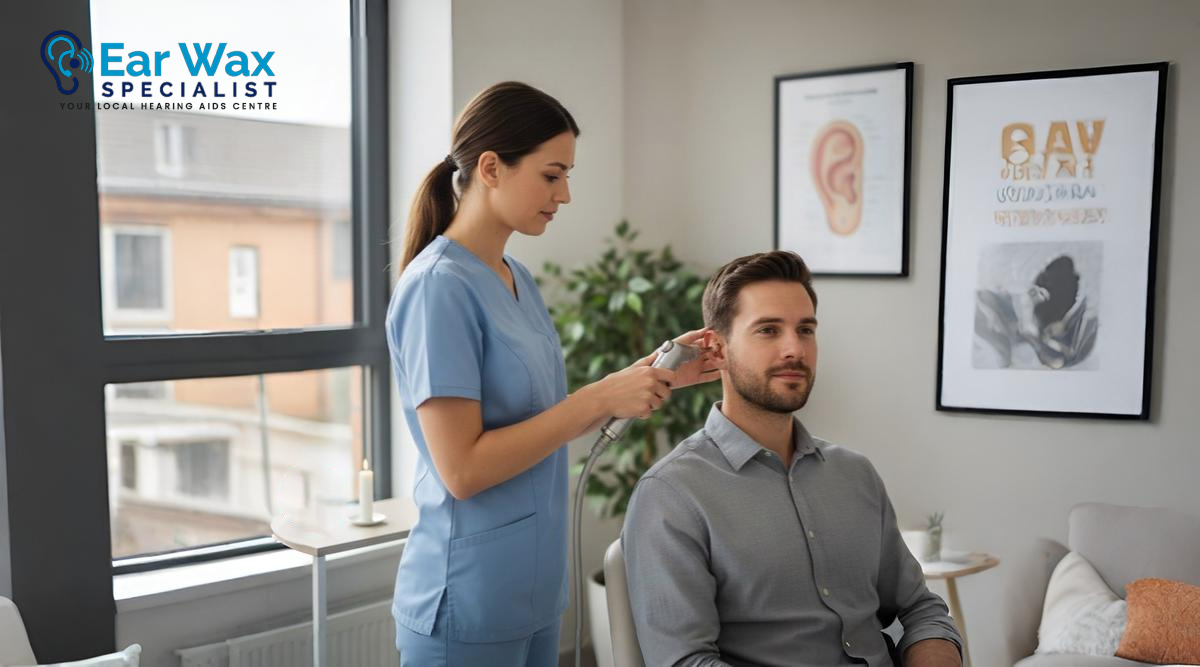
UK professionals do not recommend putting any objects into the ear canal or using any unproven home devices. Instead, evidence-based techniques performed by professionals are preferred. Microsuction is currently the most popular method available, and it enables the professional to see inside the ear and extract the wax in a regulated manner. This approach reduces the risk of injury and infection, which is why services offering microsuction ear wax removal Birmingham are often recommended for people with ongoing or complicated earwax problems.
When To Seek Professional Help For Earwax Buildup
When the problem doesn’t get better and even starts to cause some issues with everyday life, that’s the time a professional assessment is required. If the person is experiencing some hearing loss, noises in the ears, pain, drainage, and even vertigo, the problem cannot be ignored. Many people begin with attempting to soften the drops, which often may help in clearing minor blockages, though numerous attempts at earwax removal at home may delay proper attention to the problem.
In situations where symptoms develop suddenly or affect work and communication, timely access matters. This is why some patients choose Same Day Ear Wax Removal, particularly when blocked ears are causing discomfort, balance issues, or noticeable hearing changes that need prompt attention.
Frequently Asked Questions About Earwax Removal Safety
How Do You Know If Earwax Buildup Needs Professional Removal?
Signs and symptoms include hearing loss, blocked sensation, ringing sounds, and uncomfortable sensations that persist and do not resolve themselves. If this lasts for longer than a few days, assessment is recommended.
Can Earwax Removal Improve Hearing Immediately?
In many cases, yes. Hearing often improves as soon as the blockage is removed, though this can vary depending on other ear conditions.
Is Earwax Removal Painful Or Uncomfortable?
Professional removal methods are generally well tolerated. Some people feel mild pressure or noise during microsuction, but pain is uncommon.
How Often Should Earwax Be Removed Safely?
There is no fixed schedule. Some people never need removal, while others may need it occasionally. Frequency tends to depend on wax production and ear anatomy.
Can Earwax Buildup Cause Dizziness Or Balance Issues?
Yes. Impacted wax can affect balance by altering pressure or irritating the ear canal. Dizziness should always be assessed properly.
Are Home Remedies Like Olive Oil Or Drops Safe For Earwax?
Softening drops can be helpful for mild wax. They should be used as directed and stopped if symptoms worsen. They do not remove wax. They may help in the natural movements.
What Happens If Earwax Is Left Untreated?
Untreated wax may cause hearing loss, infection, tinnitus, and missed diagnoses of other ear problems. These problems are minimized if treatment is sought.
Bottom Line
In terms of earwax, there is no need to take it out, but using cotton buds, which is generally the recommended course of action by the NHS, is not recommended as it causes more problems than it solves, as it can push the earwax deeper into the ear, cause injury, and increase the chances of infection, thereby protecting your hearing against unnecessary problems with your ear health.
Medical Disclaimer
This article is for educational purposes only and does not replace professional medical advice, diagnosis, or treatment. Always consult a qualified healthcare professional for any hearing-related concerns.
Written by: Mohammed Khizar
Medically Reviewed by: Mohammed Khizar
Last Updated: 12/02/2026
References
- MedlinePlus. Earwax blockage [Internet]. U.S. National Library of Medicine; [Accessed 15 Jan. 2026]. Available from:
https://medlineplus.gov/ency/article/000979.htm - National Institute for Health and Care Excellence (NICE). Hearing loss in adults: assessment and management – Removing earwax (NG98) [Internet]. NICE; [Accessed 15 Jan. 2026]. Available from:
https://www.nice.org.uk/guidance/ng98/chapter/Recommendations#removing-earwax - U.S. Food and Drug Administration (FDA). Import Alert 77-01: Detention Without Physical Examination of Ear Candles [Internet]. FDA; [Accessed 15 Jan. 2026]. Available from:
https://www.accessdata.fda.gov/cms_ia/importalert_225.html - National Health Service (NHS). Earwax build-up [Internet]. NHS; [Accessed 15 Jan. 2026]. Available from:
https://www.nhs.uk/conditions/earwax-build-up/