

Blog Summary
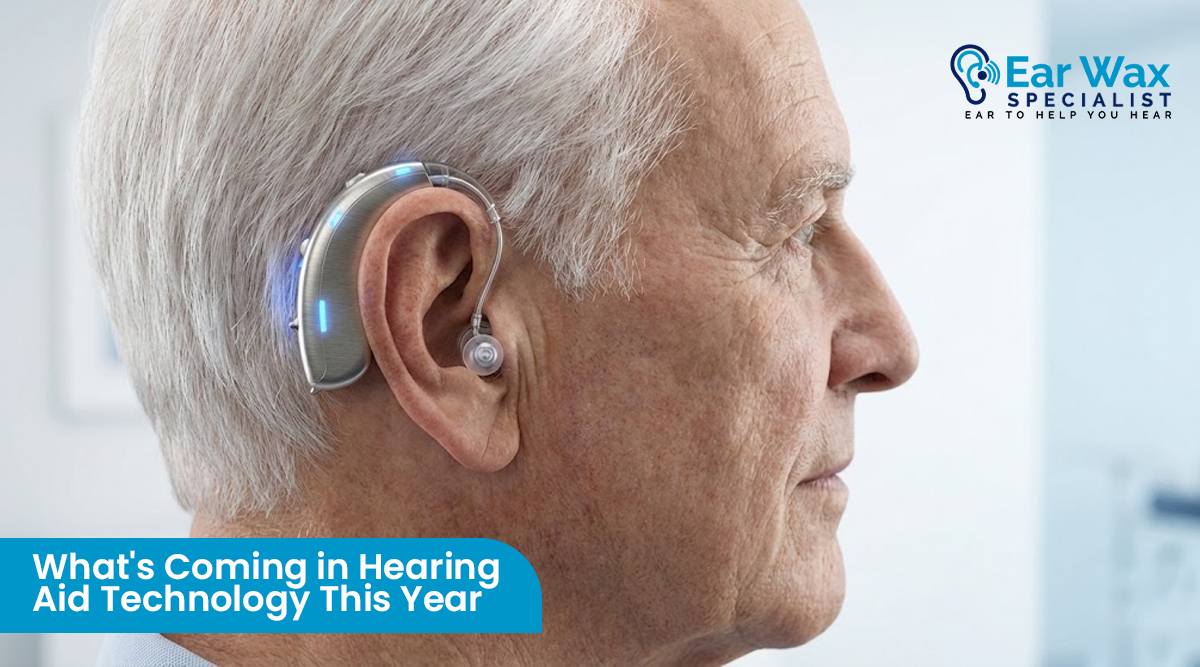
Hearing aid technology in 2026 is becoming smarter, smaller, and more connected than ever before. From AI that improves speech clarity in noisy settings to wireless audio streaming and advanced smartphone integration, modern devices are designed to fit real life. The blog also highlights the importance of professional assessment, as issues like earwax buildup can mimic hearing loss. Although technology has improved, personalized fitting and appropriate care are still important for successful hearing assistance.
Introduction
If you’ve been putting off upgrading your hearing aids, 2026 may be a good time to reconsider. The latest devices are miles ahead of what was available just a couple of years ago, and manufacturers are introducing features that would have seemed like science fiction not long ago.
According to the World Health Organization, over 430 million people worldwide suffer from disabling hearing loss, but it is projected to rise in the next few decades; thus, the continued improvement in hearing solutions can never be overemphasized. Along with technology, awareness about other issues, such as earwax buildup hearing loss, is also increasing because it is one of the most frequent and treatable reasons for hearing impairment.
At Ear Wax Specialist, we’re always keeping track of developments in hearing technology because we know how much difference the right device can make to our patients’ lives. We regularly support patients looking for hearing aid sutton coldfield services who want clear, local guidance before making any decisions.
Artificial Intelligence Is Getting Properly Clever
We’ve all heard the buzzwords about AI in hearing aids, but this year it’s actually starting to deliver something useful. Newer devices are designed to better distinguish between different types of sound, rather than just making everything louder.
Think about sitting in a restaurant with your family. Traditional hearing aids would amplify all the noise around you such as cutlery clattering, other conversations, music from the speakers. The result? Often just more noise. Newer AI-supported systems are being designed to better identify speech patterns and reduce competing noise. As per research published in National Library of Medicine, modern hearing aids use acoustic signal-processing strategies that can can improve speech understanding and reduce listening effort in daily environments; however, the extent of benefit from next-generation machine learning features is still under study.
Some upcoming models are also being developed to recognise specific voice patterns, which means they could learn to focus on your partner’s voice during a conversation while filtering out background chatter. This can be particularly helpful for people who also experience earwax and tinnitus, where background noise can make symptoms feel worse. This technology is still evolving, and results can vary depending on the individual and listening environment.
Because of these AI-driven improvements, questions about phonak hearing aid prices uk often come from people struggling in busy listening environments.
You Won’t Need To Fiddle With Wires Anymore
Remember when connecting to public sound systems meant borrowing a bulky loop receiver or hoping the venue’s hearing loop was working? Those days are ending.
A new wireless standard called Auracast is currently being rolled out in parts of the UK. Theatres, places of worship, conference centres, and even train stations are starting to install Auracast transmitters. Compatible hearing aids may be able to receive audio directly with no extra equipment, no complicated setup.
Sound quality may be clearer than older systems in supported environments, and you can connect to multiple sources at once. Watching TV at home while keeping an ear out for the doorbell? No problem.
Smaller Doesn’t Mean Less Powerful
There’s been a long-standing trade-off in hearing aids: you could have a tiny, nearly invisible device with basic features, or a larger one packed with Bluetooth, rechargeability, and advanced sound processing. That compromise is disappearing.
The latest in-ear designs include discreet options, and for many people comparing invisible hearing aids prices uk, the improvements in battery life and wireless capability are making these devices more appealing than ever. For people who’ve felt self-conscious about wearing hearing aids, this is genuinely game-changing.
Even the rechargeable battery technology has improved. Some devices now provide a full day of use from a single charge, with cases that can top them up on the go.
As devices become more compact and capable, many patients ask about oticon hearing aids prices uk when comparing premium in-ear options.
Your Hearing Aids Can Talk To Your Phone (Properly)
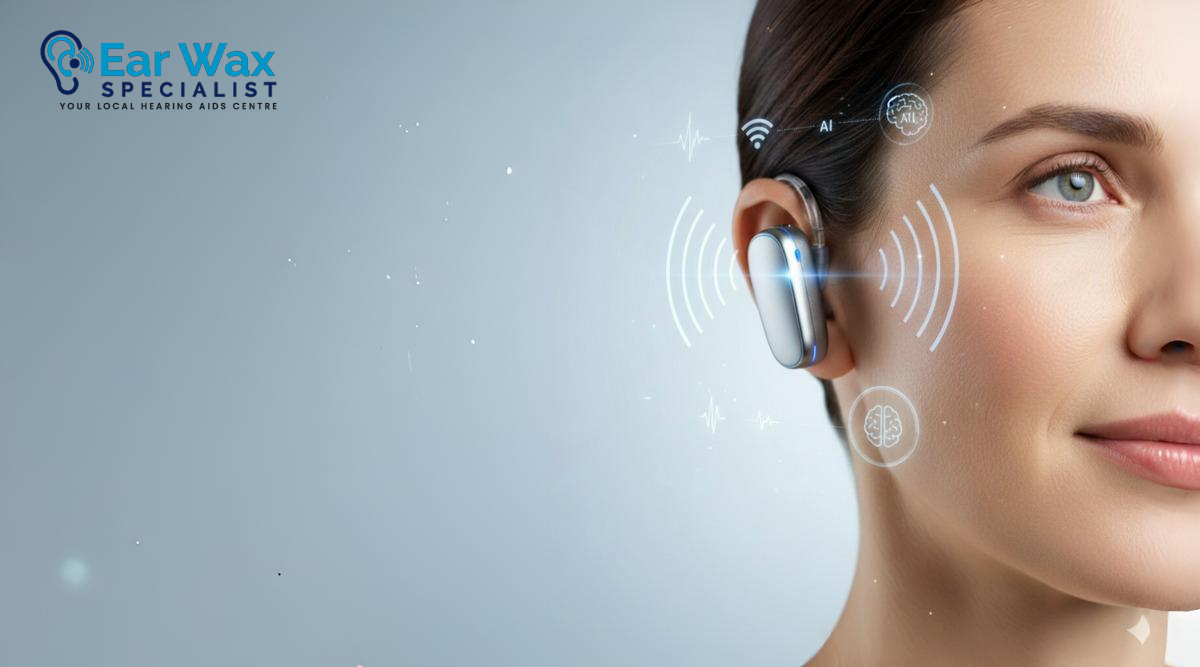
Smartphone integration isn’t new, but it’s getting more sophisticated. The apps that control modern hearing aids are starting to offer meaningful customisation rather than just basic volume controls. The option of app control has led some users to compare resound hearing aid prices uk, especially when phone connectivity is a priority.
You can now save settings for different environments like your local café, the office, the grandkids’ school play and switch between them instantly. Some apps use your phone’s GPS to automatically adjust settings when you arrive at saved locations. They may use location data to suggest adjustments, depending on user preferences and device compatibility. This integration can be useful for users of receiver in canal hearing aids, which are designed to balance discreet appearance with advanced digital features.
Voice-to-text features are also being introduced in certain models. Regulatory developments, including new FDA authorizations of over-the-counter hearing aid software, reflect a shift toward integrating consumer mobile technology with hearing care. If you’re struggling to catch what someone’s saying, some hearing aids can display a live transcript on your phone. Handy in noisy environments or when you’re speaking with someone wearing a mask. The accuracy may depend upon background noise levels and speech clarity.
What People Actually Want From Their Hearing Aids
As professionals who have fitted countless hearing aids in our many years of service, it’s no wonder that we have learned what matters most to our patients. Here’s what they are saying:
- Better water resistance. People want to wear their devices confidently, whether they’re caught in rain or working up a sweat at the gym. Some of the new models are rated for water resistance, though fully waterproof hearing aids are still rare.
- Smarter home integration. Imagine your hearing aids alerting you when the doorbell rings or the smoke alarm goes off. A few manufacturers are starting to build these features in, connecting hearing aids to home security systems and smart doorbells.
- Longer battery life. Even with improvements, some users still find themselves needing to recharge mid-day. There’s still work to be done here, particularly for the smallest models.
- Devices that fit properly from the start. This is less about technology and more about professional fitting, but it matters enormously. The fanciest hearing aid in the world won’t help if it’s uncomfortable or whistles constantly.
The Rise Of Self-Fitted Devices
Over-the-counter hearing aids are becoming more common, particularly for people with mild hearing loss. These devices can be purchased without a hearing test or professional fitting, and they’re significantly cheaper than traditional hearing aids.
Here’s our honest take: for some people, particularly those with straightforward, mild hearing loss, OTC devices can be a reasonable starting point. They’re certainly better than struggling on without any help. A randomized clinical study funded by the National Institute on Deafness and Other Communication Disorders found that older adults using professionally fitted hearing aids were more satisfied compared with pre-programmed OTC devices, supporting the value of individualized fitting and clinical oversight. This highlights the importance of addressing underlying problems, including earwax blockage symptoms, which OTC devices cannot identify or resolve.
Without proper assessment, issues such as impacted earwax complications or other medical causes of hearing difficulty can go unnoticed. Hearing loss patterns vary enormously between individuals, and a device that works brilliantly for one person might be completely wrong for another. An audiologist can measure your specific hearing profile and programme a device to match exactly what you need. The World Health Organization recommends that hearing device selection and fitting be part of comprehensive hearing care, because individual hearing needs and underlying medical conditions vary widely.
OTC devices also can’t address underlying medical issues that might be causing or contributing to hearing loss. At Ear Wax Specialist, we regularly see patients whose hearing problems are actually caused by long-term effects of earwax buildup which is something that no hearing aid will fix properly.
Looking Further Ahead: Health Monitoring
The most interesting developments might not be about hearing at all. Because hearing aids sit in your ear all day, they’re perfectly positioned to monitor other aspects of your health.
Some companies are also investigating other functionalities that go beyond supporting hearing problems such as fall detection; this will automatically alert your loved ones in case you have an accident and fall. Some others may include heart rate and activity tracking as well as detecting early-stage cognitive impairments. Interest in wellness features has also prompted enquiries about starkey hearing aid prices uk, particularly among users focused on long-term health tracking.
In the case of senior users living independently, such functions may bring a great sense of consolation to them and their families too. We’re likely to see more of this type of integration over the next few years.
Getting the Right Device For You
With all these advances, choosing a hearing aid can feel overwhelming. Should you prioritise battery life or size? Do you need all the smart features, or would a simpler device work just as well?
That would depend solely on your personal circumstances, such as the nature of your hearing impairment, personal lifestyle, dexterity, and budget. That is where a professional audiologist will make all the difference for you.
At Ear Wax Specialist, we start every hearing aid consultation with a thorough assessment. Sometimes we discover that the hearing problem isn’t a hearing problem at all; it’s a wax buildup that can be resolved with a simple removal procedure. Other times, we find that a hearing aid would genuinely help, and we can guide you through choosing and fitting the right device for your needs.
The Bottom Line
Advances in hearing aid technology have come a long way, so much so that what can be experienced in 2026 models would never have been dreamed of in the last ten years. Today’s hearing aid models are more compact, smarter, more connectivity-enabled, and able to adapt to what the individual needs.
However, technology is only one side of this equation. A very advanced hearing device will be of little benefit if it is not properly matched to your hearing impairment pattern, or if there is another underlying problem like excessive wax. Left unresolved, untreated earwax risks include worsening hearing, discomfort, and unnecessary reliance on hearing aids.
A hearing problem, for instance, will first require an assessment, which we can help with, and based on that, an appropriate measure can be taken, whether it involves removing earwax or using a hearing aid.
Want to discuss your hearing concerns? Get in touch with Ear Wax Specialist to book a consultation. We’ll give you straightforward advice about what would actually help your situation, without pushing you toward solutions you don’t need.
Medical Disclaimer
This article is for educational purposes only and does not replace professional medical advice, diagnosis, or treatment. Always consult a qualified healthcare professional for any hearing-related concerns.
Written by: Mohammed Khizar
Medically Reviewed by: Mohammed Khizar
Last Updated: 11/02/2026
References
- World Health Organization. Deafness and hearing loss [Internet]. Geneva: World Health Organization; 2023. [Accessed 15 Jan. 2026].
Available from:
https://www.who.int/news-room/fact-sheets/detail/deafness-and-hearing-loss - Jani A Johnson 1, Jingjing Xu 1, Robyn M Cox. Impact of Hearing Aid Technology on Outcomes in Daily Life II. National Library of Medicine / PubMed [Internet]. 2016. [Accessed 15 Jan. 2026].
Available from:
https://pmc.ncbi.nlm.nih.gov/articles/PMC4998844/#abstract1 - Reuters. FDA authorizes first OTC hearing aid software to be used in Apple’s AirPods Pro [Internet]; 2024. [Accessed 15 Jan. 2026].
Available from:
https://www.reuters.com/business/healthcare-pharmaceuticals/fda-authorizes-first-otc-hearing-aid-software-be-used-airpods-pro-headphones-2024-09-12/ - Humes LE, Rogers SE, Quigley TM, et al. The effects of service-delivery model and hearing aid technology on hearing-related outcomes in older adults. American Journal of Audiology [Internet]. 2017. [Accessed 15 Jan. 2026].
Available from:
https://academy.pubs.asha.org/2017/03/study-of-hearing-aid-outcomes-in-older-adults/ - World Health Organization. World Report on Hearing [Internet]. Geneva: World Health Organization; 2021. [Accessed 15 Jan. 2026].
Available from:
https://www.who.int/publications/i/item/world-report-on-hearing