Table of Contents
ToggleThe removal of earwax is a specialist skill in which demand has increased throughout the UK. Patients routinely seek intervention when their ears become blocked, and trained nurses or healthcare assistants can provide a useful service. If you are contemplating how to train as an earwax removal specialist in the UK, it helps to know the qualifications, training and career paths that are available.
Who Can Train to Become an Earwax Removal Specialist?
Can a Nurse Do Ear Syringing or Microsuction?
Registered nurses are the primary group eligible for earwax removal training. They can learn both modern ear irrigation techniques and microsuction. Training gives nurses confidence to perform procedures safely while maintaining high standards of patient care. Traditional syringing using a metal syringe is now outdated and is no longer recommended.
Can an HCA Perform Earwax Removal Procedures?
Healthcare assistants (HCAs) do perform ear irrigation and can help with this aspect of the patient pathway and may be supported to complete ear irrigation in some settings but would not normally perform microsuction because it requires a higher level of clinical training and accreditation. HCA training highlights safe irrigation techniques, patient care, and an understanding of when to refer to the registered nurse.
Who Can Perform Ear Microsuction in the UK?
Microsuction is usually thought to be more accurate and less damaging than ear irrigation and is restricted to registered nurses or other regulated health professionals who have valid microsuction ear wax removal training. As part of the training, supervised practice usually involves an opportunity to develop the dexterity and confidence to maintain the safety of their patient or clients.
Understanding the Required Qualifications and Certifications
What Qualifications Do I Need to Do Earwax Removal?
A professional healthcare background is mandatory. Registered nurses and some HCAs can apply for ear wax removal courses, but basic clinical knowledge is required. These qualifications ensure practitioners can recognise complications, take patient histories, and carry out procedures safely.
What Training Do You Need to Syringe Ears Safely?
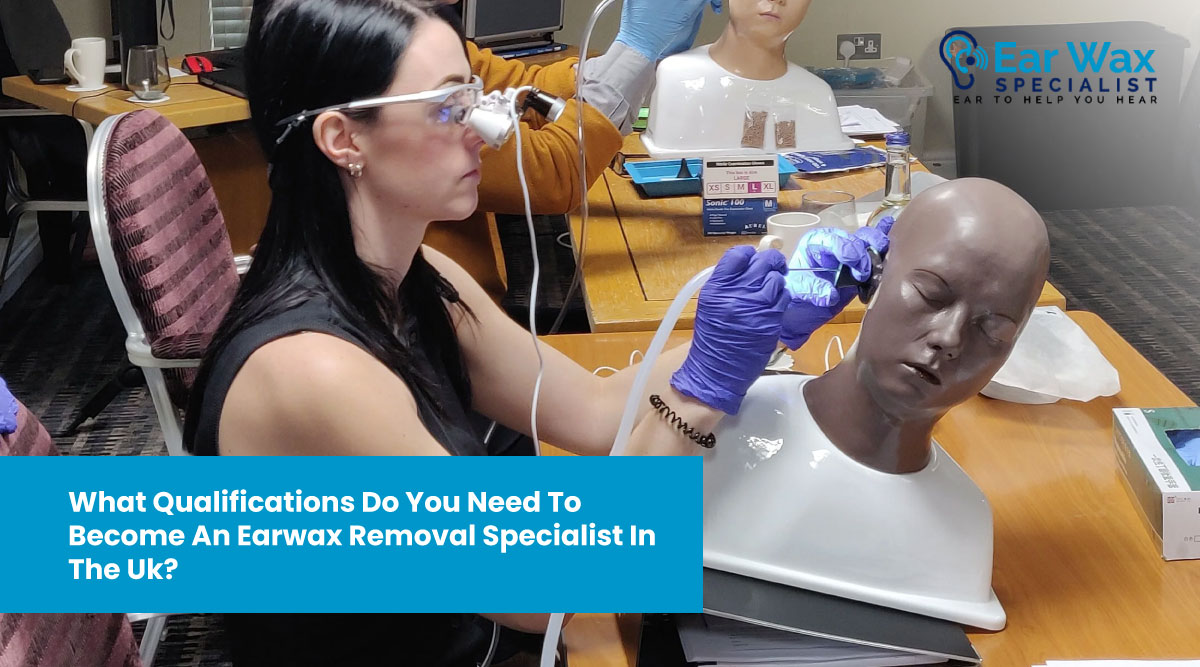
Modern ear irrigation courses (sometimes searched as “ear syringing courses” are the standard route for learning safe earwax removal using water or saline with controlled pressure. Training covers patient assessment, equipment use, hygiene, and managing possible complications. Earwax removal training usually has a mixture of theory and practical, often on models or in a supervised environment before treating patients.
Do You Have to Be CQC Registered to Do Earwax Removal or Ear Syringing?
CQC registration is for clinics and healthcare services, not for individuals. NHS staff nurses are covered by their employer’s registration, and if they work in a private clinic, it must meet CQC safety standards. Practitioners must remain accountable to their professional regulator, such as the NMC for nurses.
Available Earwax Removal Training Options in the UK
Ear Syringing Course for Nurses and HCAs
Modern ear irrigation is still widely practised. Nurses can take courses to learn safe irrigation techniques, while HCAs may assist or perform irrigation under supervision. Training includes risk assessment, patient preparation, and step-by-step irrigation technique. Practical experience is vital to handle real patients confidently.
Microsuction Ear Wax Removal Training Course
Microsuction courses are designed to teach a modern method of wax removal with vacuum extraction using a suction device under visual observation. A registered, accredited course should comprise theory and didactics as well as hands-on practice on the use of equipment, patient comfort, complications and everything relevant to undertaking the procedure. After completing a course, practitioners will feel confident to perform microsuction safely in a clinical environment.
Ear Wax Removal Course for Nurses – What’s Covered?
The training for nurses’ courses typically covers patient assessment, ear anatomy, contraindications, hygiene, irrigation and also microsuction. Many nurses search “ear syringing course near me” to locate available courses at local institutions and commercial training providers near them. The courses are usually a mix of face-to-face class time and practical observations and demonstrations so delegates can have some theory but also gain the confidence to leave and practise their skills.
Does Microsuction Earwax Removal Work?
Microsuction is thought to be safe and efficacious. The great advantage is that it allows practitioners to see the ear canal and gently suction wax. In relation to previous methods of syringing, it reduces the risk of perforation or risk of infection. It is more accurate, allows for sensitive ears, and removes wax quicker. The major disadvantages are the costs, specialist equipment and the level of training needed. In some cases, irrigation may still be preferred.
Earwax Removal Technician Salary and Career Opportunities
How Much Do Earwax Removal Technicians Earn in the UK?
Income can be variable based on experience, location, NHS versus private, etc. The entry-level technician may earn about £25000-35000 to start, depending on other factors, and compared to an experienced practitioner who may work in a private or NHS clinic or even independently, they can expect to earn over £40000 to run their wax removal service.
NHS vs Private Sector: Career Routes and Salary Comparison
The NHS is structured and offers job security with fixed pay scales, while private sector jobs provide potentially higher incomes, flexibility and opportunities to be entrepreneurial. As a matter of fact, many nurses start off in the NHS to obtain experience and then go into private practice. Both routes benefit from recognised microsuction or irrigation training.
Choosing the Right Training Provider Near You
Selecting a reputable provider is crucial. Earwax Specialist is a recognised provider offering both microsuction and modern ear irrigation courses. They provide theory, practical demonstration and supervised practice all aimed at ensuring participants maintain their professional status. When looking for a course, do check accreditation, content and reviews. If you choose wisely, they will help you develop confidence and competence.
Final Thoughts – Is This the Right Career for You?
Working in the earwax removal field offers a good clinical career, patient care, and favourable prospects as the demand increases across the UK. Nurses and HCAs can obtain recognised qualifications through modern ear irrigation courses, microsuction training and ear care programmes. Salaries are competitive and roles exist both in the NHS and independently in private practice.
If you like to do practical clinical work focusing on interacting with patients and want to take a specialist pathway in healthcare, it seems worthwhile. The only next steps are to check eligibility, pick your course and do the practical. With the correct qualifications, certification and experience, you can become a recommended earwax removal practitioner.